West Point Retaining Walls: Why May Is the Right Month to Act
A lot of West Point, UT homeowners reach out to us in spring thinking they need a simple cleanup. They want fresh mulch, defined bed edges, a clean finish on the property after a long winter. Then they start pulling debris away from a slope or a raised bed and realize the real problem isn’t on the surface. The soil has shifted. The bed wall is bowing. The grade behind a planting area has crept forward through freeze-thaw cycles, and no amount of fresh mulch is going to fix what’s happening underneath. That’s the moment most people start searching for a retaining wall contractor west point ut. If that moment is happening for you right now, May is exactly the right time to move on it.
Why West Point Soil Makes Retaining Walls a Structural Priority
West Point sits in a part of northern Utah where the soil is predominantly clay-heavy, and that creates a specific set of challenges for any structure that holds grade. Clay expands when it absorbs water and contracts as it dries out. Over a winter with multiple freeze-thaw cycles, that movement is significant. By the time May arrives, walls that were borderline last fall have often crossed into failure territory. You’ll see it in a few ways: horizontal cracking along the face of a block wall, sections that have tilted forward even slightly, gaps opening between the wall and adjacent hardscape, or soil visibly pushing through at the base.
These aren’t cosmetic issues. A wall that’s failing is actively allowing soil to migrate, which affects drainage, plant root stability, and in some cases the structural integrity of nearby hardscape like patios or walkways. Our team has written about how drainage and grade work together in West Point’s clay conditions, and the same principles apply here. Our piece on yard grading and drainage in West Point covers those fundamentals and pairs well with a retaining wall consultation.
What to Look for Before Calling a Retaining Wall Contractor West Point UT
You don’t need to be a contractor to do a basic assessment of your own property. Walk the perimeter of any sloped area, raised planting bed, or terraced section of your yard and look for the following:
- Walls that are no longer plumb or have a visible lean toward the downhill side
- Cracks running horizontally across block or timber walls (horizontal cracks are more serious than vertical ones)
- Soil or mulch that keeps washing out from behind the wall, even after you replace it
- Standing water pooling near the base of a wall after rain or irrigation
- Gaps between the wall and adjacent concrete, pavers, or edging
- Sections of wall that feel loose or shift when you press on them
Any one of these signs is worth a professional evaluation. Two or more means the wall is likely past the point of minor repair and needs to be rebuilt with proper drainage infrastructure behind it. Our hardscaping services include full retaining wall design and installation built for West Point’s soil and slope conditions, not just surface-level block replacement.
May Is the Window for Retaining Wall Projects in Northern Utah
There’s a practical reason May matters so much for this type of work. The ground has thawed and is workable, but it hasn’t been baked dry by summer heat yet. That matters for excavation, for compacting base material properly, and for getting drainage aggregate placed correctly behind the wall. Summer heat accelerates soil drying and can cause freshly disturbed ground to crack before a new wall has a chance to settle properly. It also matters for scheduling. A retaining wall contractor west point ut who is worth hiring will have a full calendar by late June. Projects that start in July are often squeezed, rushed, or pushed to fall entirely.
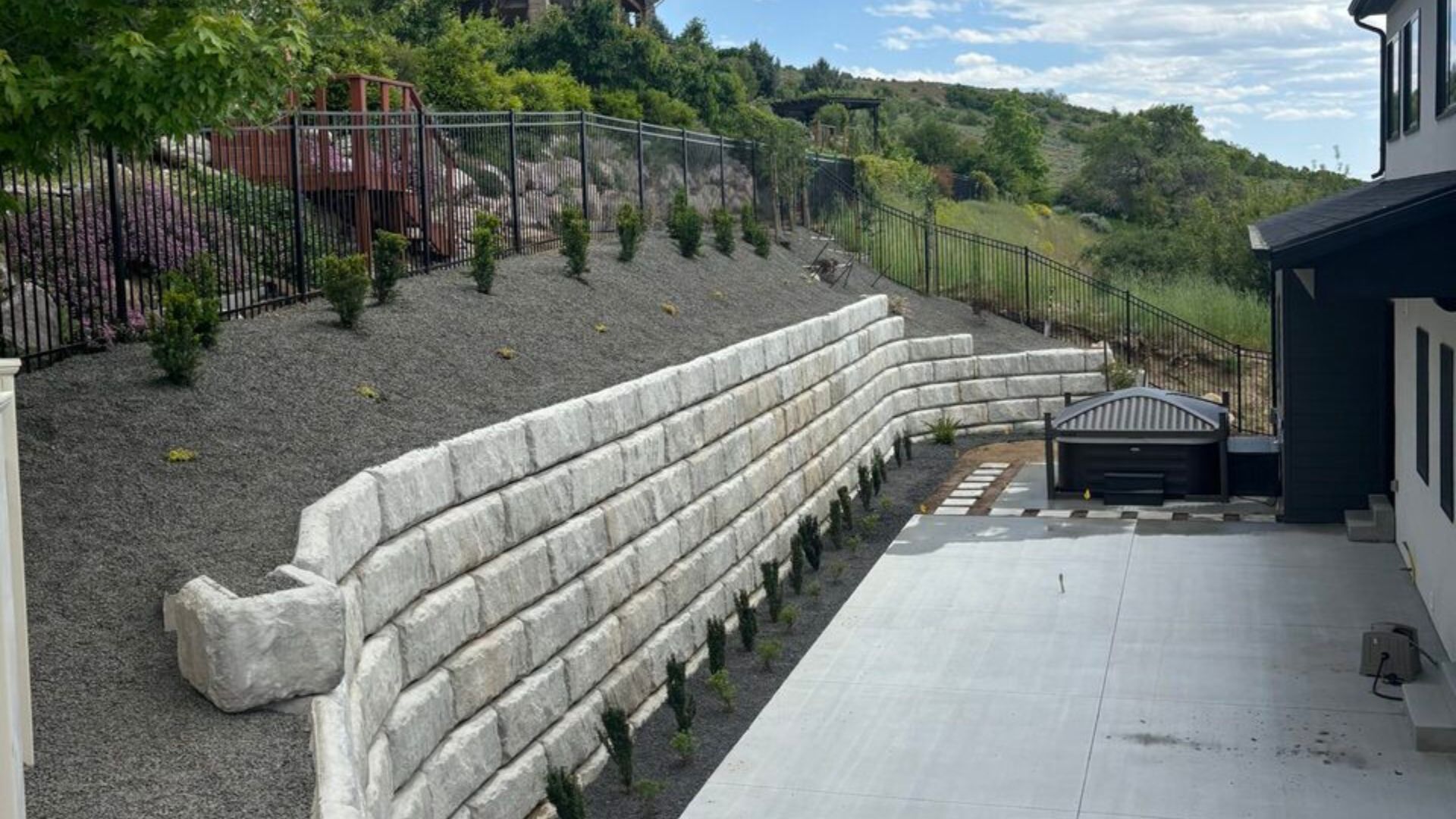
If your wall needs to be rebuilt, the process involves excavating the existing structure, assessing the soil condition behind it, installing a proper drainage layer with perforated pipe and gravel, and then building back up with the right block system for your load and slope. That’s a multi-day project that requires dry, moderate conditions to execute correctly. May gives us that window. July often doesn’t.
For homeowners who also want to address the landscape around a rebuilt wall, this is a good time to think about landscape installation and irrigation planning as part of the same project. Rebuilding a wall and then running irrigation through an area that wasn’t designed for it is a common way to accelerate future wall failure. Doing it right the first time saves a second project in three years.
How Sand Dogs Approaches Retaining Wall Projects in West Point
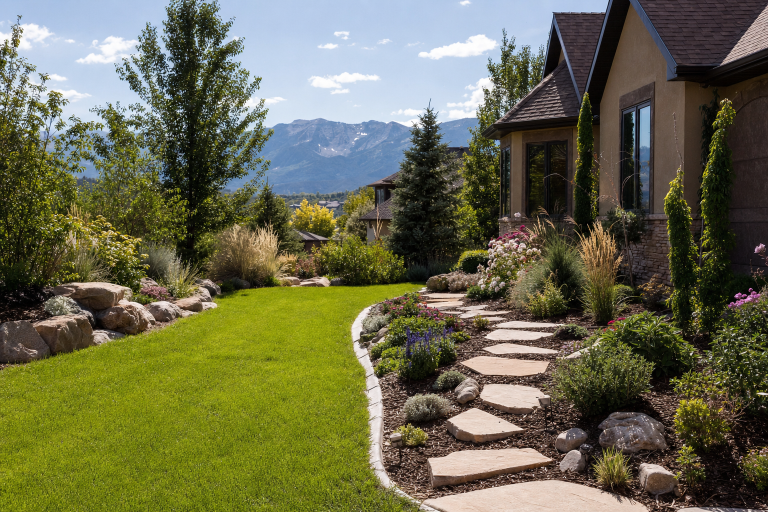
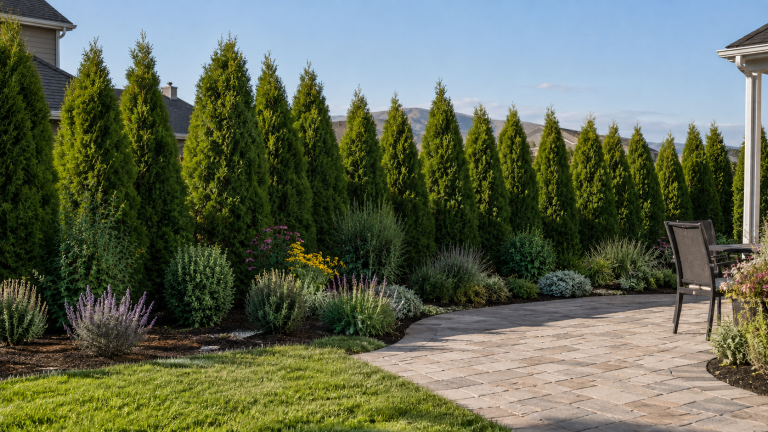
We design retaining walls for strength, longevity, and visual cohesion with the rest of your property. That means we’re thinking about drainage behind the wall, the load the wall needs to carry, the materials that hold up in northern Utah’s climate, and how the finished wall fits into the broader landscape design. We also handle the surrounding work, including bed preparation, mulch, plantings, and edging, so the finished result looks intentional rather than patched together.
Our team serves West Point and surrounding communities including West Haven and Farmington. If you’ve been putting off a retaining wall evaluation, the conversation is easier to have in May than in August when the ground is hard, schedules are packed, and the wall has had another three months to move.
Homeowners who reach out to a retaining wall contractor west point ut after July 4th typically find themselves waiting until fall for installation, which means another full summer of soil migration and potential damage to adjacent hardscape. Reaching out now through our contact page puts you ahead of that timeline and gives our team time to assess, design, and schedule your project while conditions are still in your favor.