Drip Irrigation vs. Sprinklers in West Point, UT
If you have ever dug even a few inches into a West Point, UT yard, you know exactly what you are working with: dense, compacted clay that holds water in ways turf grass does not always appreciate. After a spring rain, that clay sits saturated for hours. In dry stretches, it cracks and sheds surface water before it ever soaks in. That single soil characteristic shapes almost every decision around irrigation system installation West Point UT homeowners face, and it is the reason choosing between a drip system and a traditional sprinkler system deserves more than a quick answer. Both are legitimate options. Which one works depends on your yard layout, your plant mix, and how you want to manage water long-term.
Drip Irrigation: Targeted, Efficient, and Built for Beds
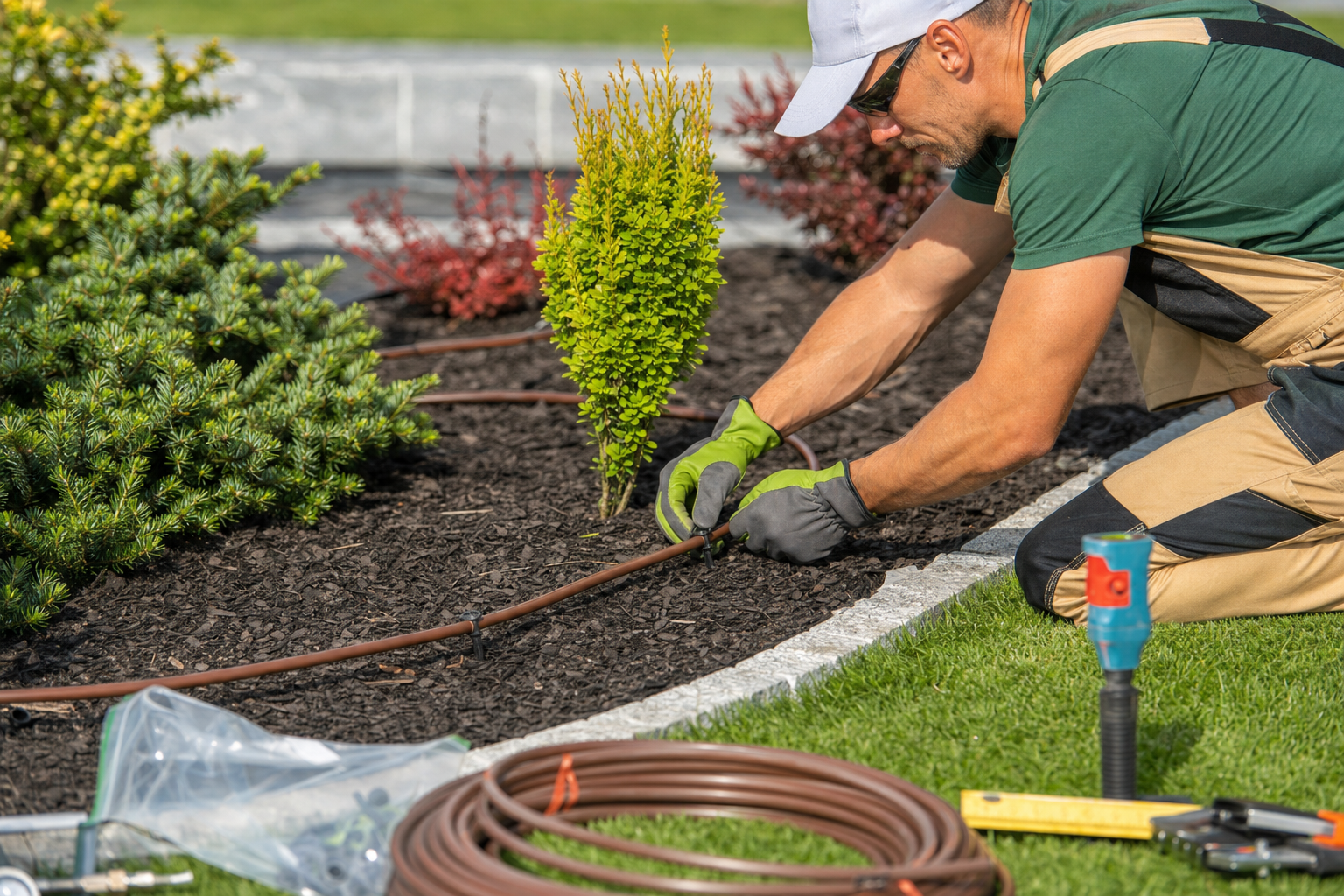
Drip irrigation delivers water slowly and directly to the root zone of individual plants through a network of low-pressure tubing and emitters. There is no spray, no mist, and very little evaporation. Water goes exactly where it is needed and at a rate the soil can absorb.
Where it works well: Drip is the strongest performer in landscape beds, vegetable gardens, shrub borders, and areas with trees or perennials. Because it applies water slowly, it gives even West Point’s dense clay soil time to absorb moisture rather than running off the surface. It also keeps foliage dry, which reduces fungal pressure on plants that are susceptible to leaf disease.
From a water efficiency standpoint, drip systems consistently outperform spray-based systems. That matters here. Weber County has seen increasing pressure on secondary water systems, and many West Point neighborhoods are working toward tighter water budgets during peak summer months.
Where it falls short: Drip irrigation does not work well for turf. It cannot deliver water evenly across a lawn surface, so if you have grass, drip alone will not cover it. Emitters can also clog over time, particularly with the slightly mineral-heavy water common in this area. Systems need periodic flushing and inspection to stay functional. Our team covers this through our irrigation maintenance and repair services, but it is a real consideration if you prefer a fully hands-off setup.
In-Ground Sprinkler Systems: Full Coverage for Lawn-Heavy Properties
In-ground sprinkler systems use pressurized zones with pop-up heads or rotary nozzles to broadcast water across a defined area. They are the standard choice for turf coverage and work well on properties where lawn makes up a significant portion of the landscape.
Where they work well: For a typical West Point property with a front lawn, side yards, and a backyard grass area, a zoned sprinkler system gives you the coverage and runtime control you need. Modern systems with smart controllers can adjust run times based on weather data, which helps offset some of the efficiency gap compared to drip. Rotary nozzles, in particular, apply water slowly enough to reduce runoff on clay, which is a meaningful upgrade over older fixed-spray heads.
Sprinkler systems are also easier to expand and adjust as your landscape changes. Adding a zone for a new planting area or shifting head placement after a hardscape project is straightforward with an established system.
Where they fall short: Spray-based systems lose more water to evaporation, especially during West Point’s hot July and August afternoons when temperatures regularly push past 95 degrees. Overspray onto hardscaping, driveways, and sidewalks is common if heads are not calibrated carefully. And because they apply water faster than clay absorbs it, runoff is a real issue if run times are not dialed in correctly. Our blog post on yard grading and drainage in West Point covers how improper water distribution compounds drainage problems that many properties here already deal with.
Irrigation System Installation West Point UT: Key Differences at a Glance
Cost: Drip systems are generally less expensive to install in beds and smaller spaces. Full in-ground sprinkler systems covering turf zones carry a higher upfront cost, though the range depends heavily on property size and zone count.
Water use: Drip systems use significantly less water per square foot. In a region where secondary water costs and conservation goals are both increasing, that efficiency has real financial value over time.
Maintenance: Both systems need annual startups and winterizations to prevent freeze damage. Our irrigation startup and winterization services handle this for both system types. Drip systems require more attention to emitter condition throughout the season. Sprinkler systems need periodic head adjustment and pressure checks.
Coverage: Sprinkler systems win on turf coverage. Drip systems win on bed and garden efficiency. Most well-designed properties use both.
What Works Better in West Point Specifically
The clay soil here changes the math on both systems. Surface runoff from spray heads is a genuine problem on properties without significant slope modification, and we have seen it contribute to pooling near foundations and along fence lines. Drip systems sidestep that issue entirely in beds. For turf areas, rotary nozzles on a properly zoned in-ground system perform better than fixed spray heads on clay because they apply water at a rate closer to what the soil can absorb.
West Point’s growing season also puts real demand on irrigation from late April through September. A system that is not properly matched to the soil and plant mix here will either underwater during heat spikes or contribute to the waterlogging that clay is already prone to. If you are also planning new sod or seeding, our post on sod installation in West Point explains how irrigation timing directly affects establishment success.
Homeowners researching irrigation system installation West Point UT for the first time are often surprised by how much the local soil type narrows the field of good options. Clay changes the performance of both system types in ways that generic installation guides do not account for, which is why a site-specific assessment matters before any equipment is ordered.
What We Typically Recommend and Why
For most West Point properties, we recommend a hybrid approach: an in-ground sprinkler system with rotary nozzles for turf zones, paired with dedicated drip zones for landscape beds, trees, and shrubs. This gives you full lawn coverage without sacrificing the efficiency and precision that beds need. A smart controller ties both systems together and adjusts automatically for weather, which matters here during the stretches in July and August when manual adjustments are easy to forget.
If your property is primarily beds and hardscape with minimal turf, a drip-only system is the cleaner and more cost-effective path. If you are working with a large traditional lawn and minimal planting beds, a well-zoned sprinkler system with quality nozzles handles the job.
Irrigation system installation West Point UT is not a one-size answer. The right system depends on your specific yard, and we are glad to walk through the details with you before any work begins. Reach out to our team to talk through what your property actually needs.
FAQ: Drip Irrigation vs. Sprinklers in West Point, UT
Is drip irrigation better than sprinklers?
Drip irrigation is usually better for planting beds and targeted watering, while sprinklers are better for larger lawn areas that need even coverage.
Can one yard use both systems?
Yes. Many West Point yards work best with sprinklers for turf and drip irrigation for trees, shrubs, foundation beds, and planted areas.
What matters most before irrigation installation?
Soil, slope, water pressure, plant type, lawn size, and drainage should be reviewed before choosing the system layout.