Landscaping Farmington UT: What Full-Service Work Actually Looks Like From Design Through Install
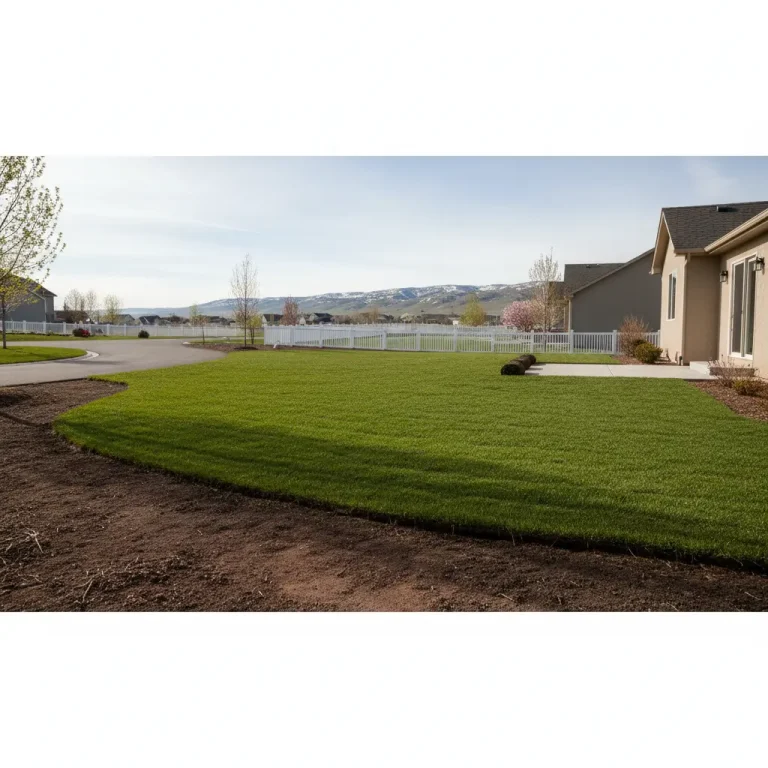
Farmington sits at the base of the Wasatch Front in a way that creates a genuinely layered set of challenges for homeowners trying to build or improve their outdoor spaces. The bench areas along the foothills carry steeper grades and rockier subsoil, while properties closer to the valley floor deal with the heavy clay that defines most of northern Utah. Both conditions require different approaches, and that variation is exactly why landscaping Farmington UT projects need more upfront planning than most homeowners expect. We work throughout this area from our base in West Point, UT, where the low-elevation position near the Great Salt Lake shoreline means our crews deal daily with high water tables and moisture-retentive soils that inform how we approach every project across our service area. The range of site conditions we see in Farmington is wider than almost anywhere else we work.
What Full-Service Landscaping in Farmington Actually Involves
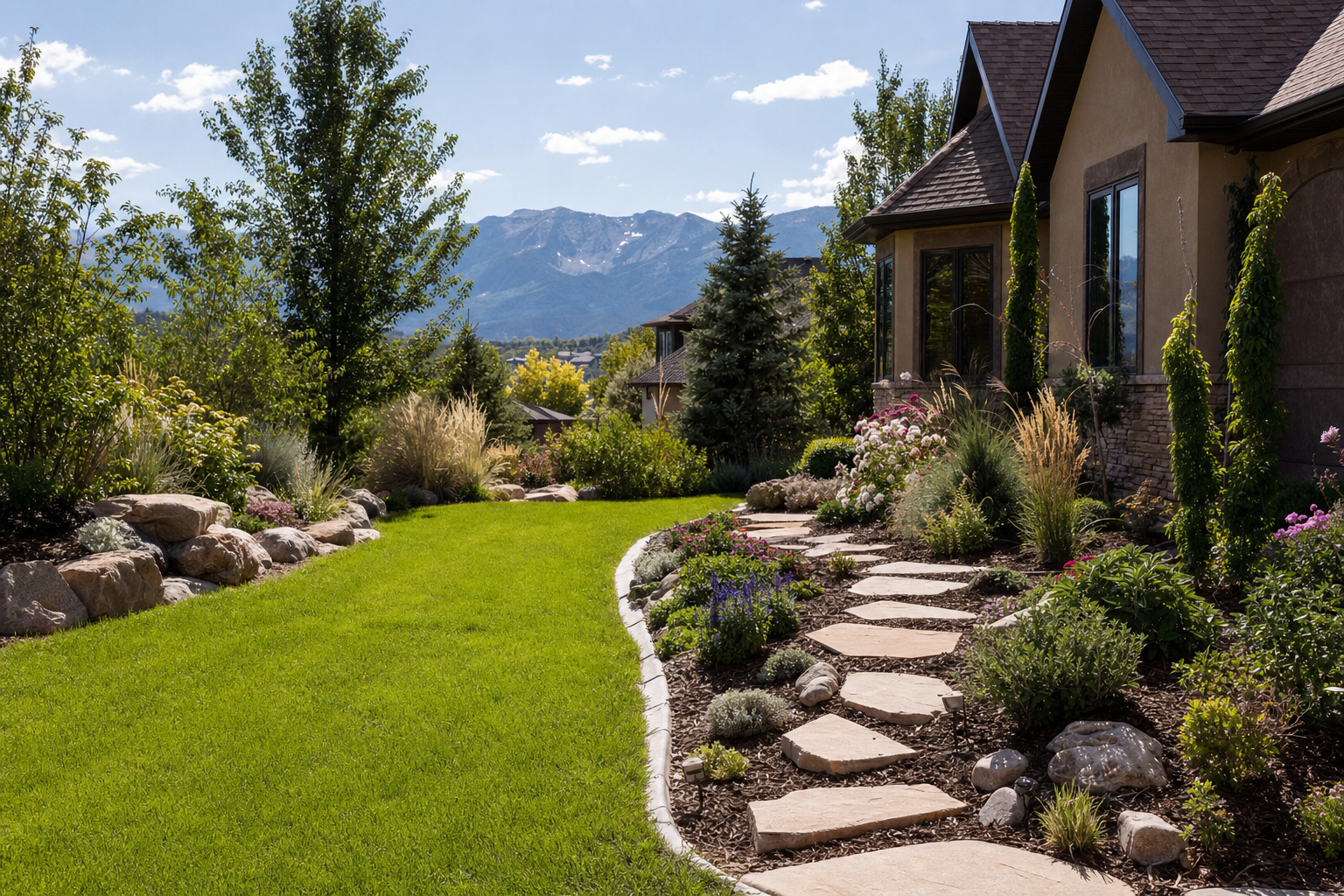
Full-service landscaping covers the entire scope from raw or neglected ground to a finished, functional outdoor space. That includes grading and drainage work, hardscape installation, softscape planting, irrigation, lighting, and ongoing maintenance. These components are not separate projects you layer on top of each other over time. They are interdependent systems, and the order in which you address them matters enormously.
Grading comes first. If water does not move away from your foundation and toward appropriate drainage points, nothing else you install will perform the way it should. Patios settle unevenly, sod drowns in low spots, and plant beds stay waterlogged through spring. We cover this in more detail in our guide to yard grading and drainage slope, but the principle applies directly to Farmington properties where clay subsoil limits percolation and hillside runoff can be significant.
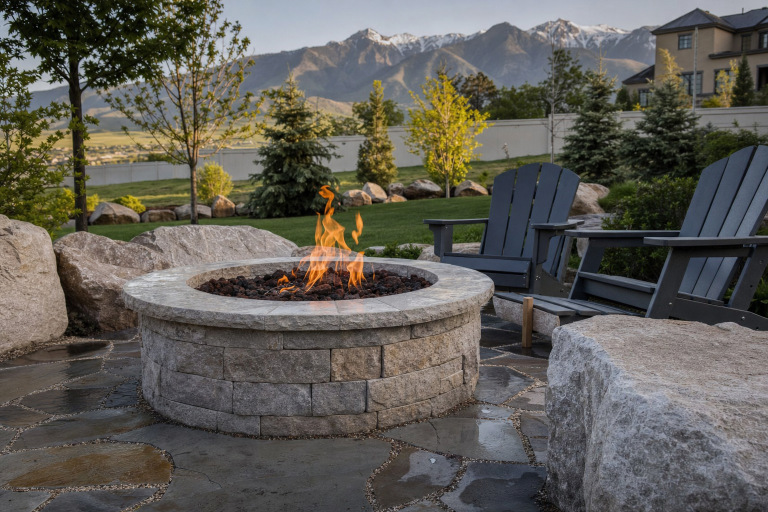
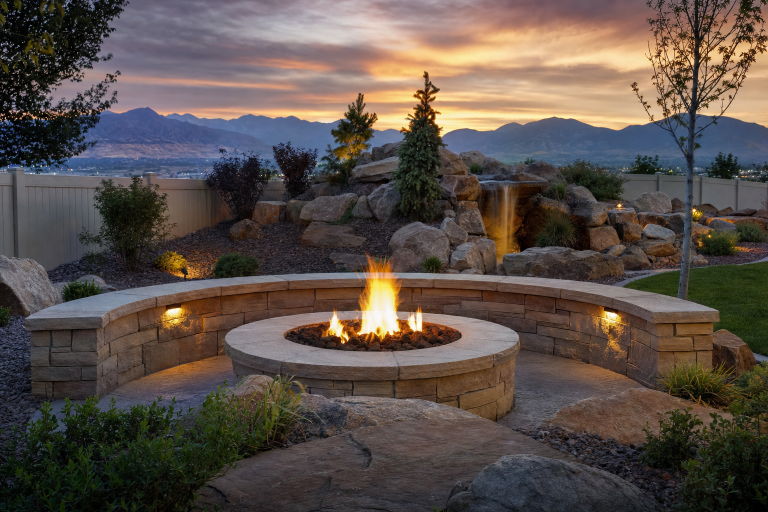
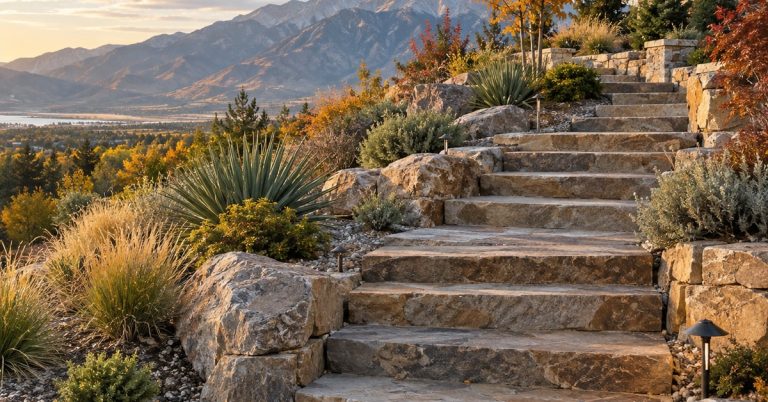
Once grading is established, hardscaping goes in next. Patios, walkways, retaining walls, outdoor kitchens, and fire features all require a stable, properly compacted base. On Farmington’s bench properties especially, retaining walls are often structural requirements before any other landscaping can happen. A wall that is not built to handle freeze-thaw cycles and lateral soil pressure will fail within a few seasons, regardless of how good the surface looks at install.
Why Landscaping Farmington UT Projects Require Soil-Specific Planning
The clay soil throughout Davis County, including Farmington, behaves differently than the sandy or loamy soils found in other parts of Utah. It holds moisture for extended periods after irrigation or rain, which creates two problems that pull in opposite directions. In spring, it stays saturated long enough to suffocate new plantings if drainage is not addressed. In late summer, it can crack and shift as it dries out, which puts stress on hardscape edges and root systems alike.
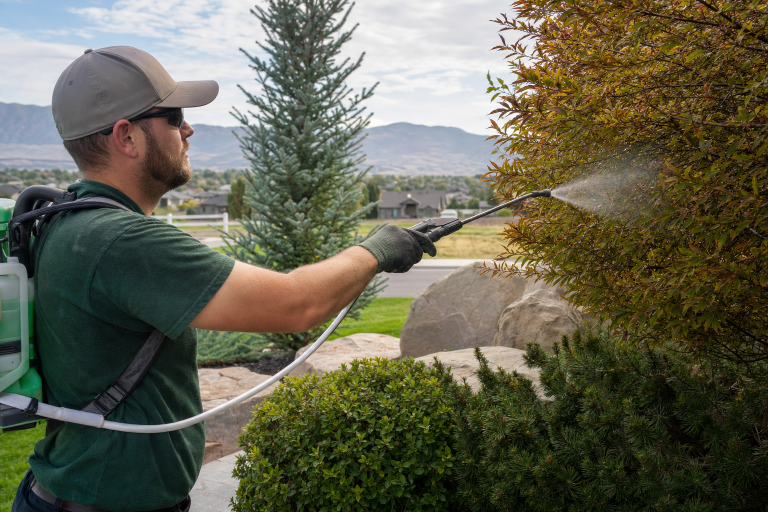
For turf areas, this means lawn care programs need to account for compaction more aggressively than they would on lighter soils. Core aeration is not optional in this environment. It is a foundational practice that keeps clay from locking out water and nutrients at the surface. We also factor soil pH into our planting recommendations, since alkaline conditions across northern Utah limit the availability of certain nutrients that plants need to establish and thrive.
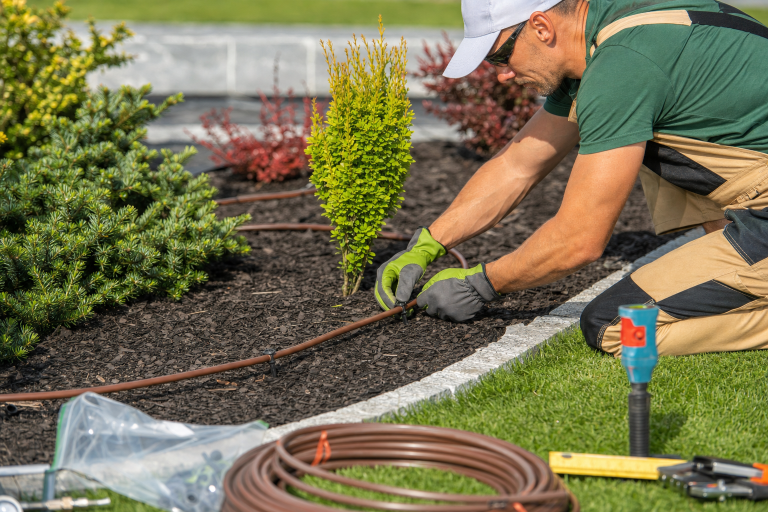
Irrigation design is another area where soil type drives the approach. Clay absorbs water slowly, so run times and cycle frequencies need to be calibrated carefully to avoid runoff and pooling. Drip systems work well in bed areas for this reason, delivering water slowly enough that the soil can actually absorb it. In turf zones, cycle-and-soak programming helps prevent the surface saturation that leads to fungal issues and wasted water.
What the Process Looks Like From First Conversation to Finished Project
We start with a site visit, not a phone estimate. Farmington properties vary enough in grade, soil depth, and existing infrastructure that we need to see the space before we can give you an accurate scope of work. During that visit we are looking at drainage patterns, existing hardscape conditions, sun exposure, and access for equipment.
From there we build out a design and rendering so you can see the project before any ground gets broken. This step matters more than most homeowners realize. Changes made on paper cost nothing. Changes made mid-install cost real money and time. Our landscape design and install process is built around getting the plan right first so execution stays clean.
Installation sequencing follows a consistent order: earthwork and grading, underground utilities and irrigation rough-in, hardscape installation, planting and softscape, irrigation finish work, and lighting. Each phase has to be completed and inspected before the next one begins. Skipping steps or overlapping phases is how projects end up with pavers that need to be pulled up to fix a drainage line that should have been set three weeks earlier.
For plant and tree installation, June is actually a productive month in northern Utah if irrigation is already in place. Warm soil temperatures support root establishment, and consistent watering through the first summer gives new plantings the best chance of surviving their first winter. We do not recommend installing trees or shrubs without a functioning irrigation system already running. Hand watering through a Utah summer is not a reliable substitute.
How to Know Your Property Is Ready for a Full Landscaping Project
The clearest signal is that you have finished the structural work on your home and are ready to address the outdoor space as a permanent investment rather than a temporary fix. Patching bare spots, adding a few plants near the entry, and hoping drainage sorts itself out are approaches that tend to create more work over time, not less.
If you are dealing with erosion on a slope, standing water after rain, a patio that has shifted or cracked, or a yard that simply has no cohesive function or appearance, those are all signs that a full design and install approach will serve you better than incremental fixes. We also see a lot of properties in Farmington where previous landscaping was installed without proper drainage planning, and the whole system needs to be reset from the ground up.
For homeowners in Farmington and surrounding communities like West Haven, the peak window for landscaping Farmington UT installs runs from late spring through early fall. June and July give us the longest working days, the best soil conditions for hardscape base compaction, and enough growing season left for softscapes to establish before temperatures drop. Projects scoped and designed now can be scheduled and completed before the first frost arrives in October. Homeowners who have been putting off a full landscaping Farmington UT project often find that starting the design conversation in spring puts them in the best position to hit that summer installation window.
For broader homeowner context, EPA WaterSense landscaping tips and University extension landscape maintenance guidance offer useful background on planning, safety, and maintenance decisions related to this kind of work.
If you want to understand more about how ongoing landscape maintenance fits into a long-term plan after installation, or how our lawn care process works through the growing season, those resources give a clear picture of what comes after the install phase is complete. Reach out through our contact page to schedule a site visit and get the conversation started.