Sod Installation in West Point: What You Need to Know About Our Local Clay Soil
If you’re considering a new lawn in West Point, UT, you’re dealing with some of the heaviest clay soil along the Wasatch Front. We’ve installed thousands of square feet of sod throughout our area, and that clay base changes everything about how we prep, grade, and lay new turf. April is actually one of the best months for sod installation west point ut homeowners can schedule because the soil is workable, temperatures are moderate, and new grass has the entire growing season ahead to establish deep roots before next winter.
Why Soil Preparation Matters More Here Than Anywhere Else
The clay soil we work with throughout West Point doesn’t drain like the sandy loam you’d find in other parts of the country. When we start a sod installation project here, we spend more time on soil prep than the actual sod laying. That’s not us padding the timeline. It’s the difference between a lawn that thrives for decades and one that struggles with pooling water and thin growth within a year.
We typically bring in a layer of quality topsoil and work it into the existing clay base. The goal is creating a transition zone where roots can penetrate down while water can actually move through the profile instead of sitting on top. For most residential properties in West Point, that means adding 3-4 inches of amended soil and tilling it into the top few inches of clay for a stronger landscaping base. Some properties near the wetland areas closer to the Great Salt Lake need even more drainage work before we ever think about rolling out the first pallet.
What Sod Installation West Point UT Projects Look Like Start to Finish
Our process starts with grading. West Point lots often have subtle drainage issues that aren’t obvious until you get a heavy spring rain. We establish proper slope away from foundations and identify any low spots that need filling. This is especially important in the newer developments west of 3200 West where lot grading sometimes leaves something to be desired.
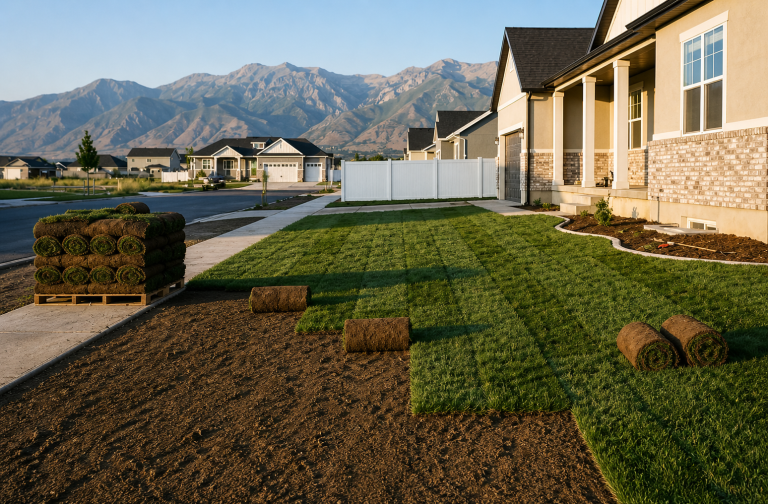
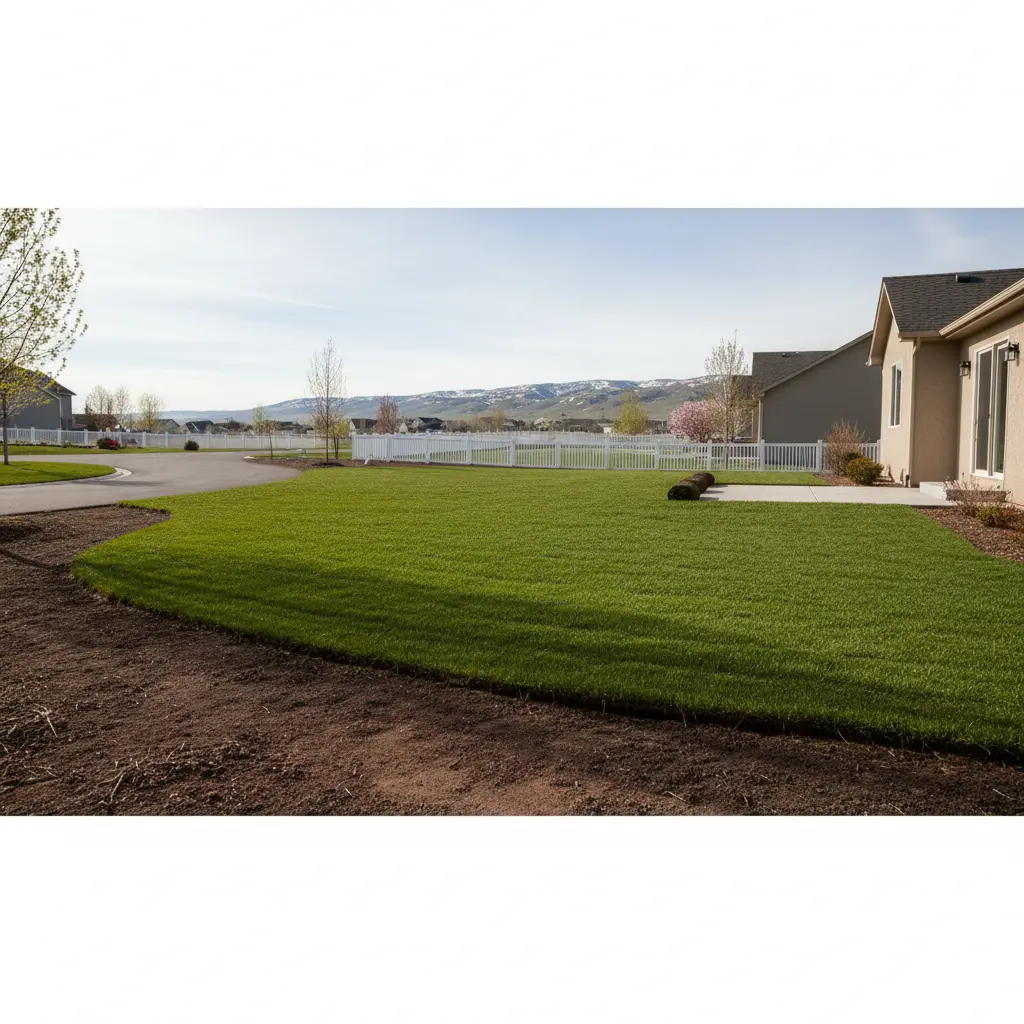
Once grading is set, we address that clay soil issue. We bring in screened topsoil, spread it evenly, and incorporate it with the existing base. Then comes fine grading to create a smooth surface exactly three-quarters of an inch below your final grade. That specific measurement accounts for sod thickness and ensures your new lawn sits flush with walkways and driveways.
We order sod the day before installation. Kentucky bluegrass is what we install most often here because it handles our cold winters and recovers well from the summer heat we get in July and August. The sod comes on pallets early morning, and we start laying it immediately. Sod is a living plant that’s been cut from its root system. Every hour it sits on a pallet is stress.
The actual installation goes faster than people expect. A typical 5,000 square foot lawn takes our crew about four to six hours to lay once prep work is complete. We stagger the seams like brickwork, tuck edges tight against hardscaping, and roll the entire lawn to ensure good soil contact.
The First Three Weeks Determine Everything
Watering new sod is not complicated, but it’s specific. For the first two weeks, that sod needs to stay consistently moist while roots grow down into your prepared soil. We’re talking multiple short watering cycles per day in the beginning, not one long soak. The roots are only an inch long when we install it. They need moisture right at the surface.
By week three, you’ll see roots penetrating into the soil below. That’s when we start transitioning to deeper, less frequent watering that encourages roots to chase moisture downward. This is where that soil prep pays off. In pure clay, roots hit a barrier and spread horizontally. In properly prepared soil, they drive down six inches or more, creating a lawn that handles heat and drought stress much better.
West Point’s water comes from wells and the Weber Basin system, and it’s hard water with high mineral content. That’s fine for established lawns, but new sod benefits from consistent moisture without long dry periods in these critical first weeks.
Why Spring Sod Installation West Point UT Homeowners Schedule Now
We install sod from April through October, but spring installation gives you the longest establishment period before serious heat arrives. Sod installed in April has eight weeks of moderate temperatures to root in before we hit the consistent 90-degree days of summer. Fall installation works too, but you’re racing against freeze dates and going into winter with a lawn that’s only partially established.
The other advantage right now is availability. Sod farms are fully stocked coming out of winter, and our schedule has openings. By late May, we’re often booking two to three weeks out as the rush hits. If you’re working on a new construction home or finally replacing that weedy mess in your backyard, this is the window when everything aligns in your favor.
For sod installation west point ut property owners are scheduling this month, we’re seeing projects completed and looking established by the time July heat arrives. That gives homeowners a full summer to enjoy the yard instead of nursing along struggling grass.
We’ve been doing this work in West Point long enough to know which shortcuts create problems and which details actually matter. The difference between adequate sod installation and the kind that’s still performing fifteen years later comes down to soil prep, proper grading, and understanding how our specific clay base and climate affect root development. If your property is ready for new turf and you want it done right the first time, we should talk about your specific lot conditions and timeline before the spring schedule fills completely. You can get details to us through our contact page, and we’ll come take a look at what you’re working with.
Frequently Asked Questions About Sod Installation in West Point
Why does soil preparation matter so much for sod installation in West Point?
West Point has heavy clay soil that holds water and slows root development when it is not prepared correctly. Proper grading, topsoil, and soil blending give new sod a better root zone and reduce future drainage headaches.
When is the best time to install sod in West Point, UT?
Spring is usually the best window because temperatures are moderate and the lawn has time to establish before the worst summer heat arrives. Fall can work too, but the rooting window is shorter before winter sets in.
How long does new sod need extra watering?
The first couple of weeks are the most important. New sod needs consistent moisture early on, then a gradual shift to deeper watering so roots move down into the prepared soil instead of staying shallow.