
Lawn Fertilization in West Point, UT: Timing for Clay Soil and Alkaline pH
If you have ever pushed a shovel into the ground in West Point, UT and felt it resist like you were cutting into damp clay pottery, you already know something important about your lawn. That resistance is not just a nuisance at planting time. It is a direct signal about how your soil holds nutrients, moves water, and responds to fertilizer throughout the growing season. Understanding that signal is the foundation of smart lawn fertilization west point utah homeowners can actually rely on, rather than following a generic bag label written for somewhere else entirely.

West Point’s Soil: Heavy Clay Left Behind by Lake Bonneville
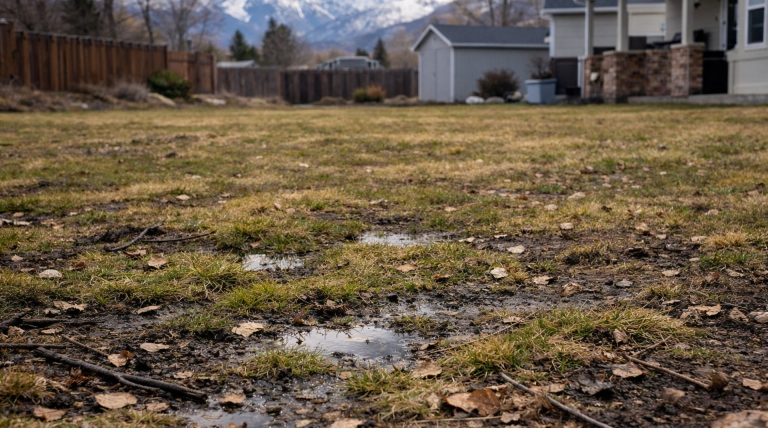
Most of the residential land in West Point sits on lacustrine deposits, fine-grained sediments left behind when Lake Bonneville covered this part of the Great Basin thousands of years ago. The Utah State University Extension yard and garden program is a useful reference point if you want to understand how Utah soil chemistry affects turf performance beyond a simple fertilizer schedule. The result is a soil profile that trends toward heavy clay, particularly in the upper 12 to 18 inches where your lawn’s root system lives. Drive out toward the western edges of West Point near the agricultural parcels along 3000 West and you can see how that soil behaves after a rain event: water pools, drains slowly, and leaves a hard, cracked surface once it dries out.
For lawns, this matters in a specific way. Clay soils hold nutrients well, sometimes too well. Potassium and phosphorus can bind tightly to clay particles and become unavailable to grass roots even when the nutrients are technically present in the soil. At the same time, the high pH common in northern Utah soils, often ranging from 7.5 to 8.2 in this area, locks up micronutrients like iron and manganese. That is why so many West Point lawns develop that yellowish, chlorotic look in late spring even when they have been fertilized. The grass is not necessarily starving. The nutrients are just not in a form the plant can absorb.
We have written more about how this same clay profile affects sod establishment in our article on sod installation in West Point, which covers soil preparation in more depth.
The Timing Question: Why Lawn Fertilization West Point Utah Requires a Different Calendar
Fertilization timing in northern Utah does not follow the same rhythm you would use in the Pacific Northwest or the Midwest. Homeowners comparing climate assumptions can also check the USDA Plant Hardiness Zone Map, but for lawns the more important signals are soil temperature, moisture, and compaction. West Point sits in USDA Hardiness Zone 7a, which means the last frost typically falls somewhere between mid-April and early May. Right now, in April 2026, soil temperatures in the area are just beginning to climb above the 50-degree threshold that activates meaningful microbial activity and root uptake in cool-season grasses like Kentucky bluegrass and tall fescue, which dominate most West Point lawns.
Applying a nitrogen-heavy fertilizer before soil temperatures are ready is one of the most common mistakes we see. The nitrogen does not get taken up efficiently, it leaches or volatilizes, and you end up with an uneven green-up that actually stresses the turf. A better approach for this region is a light application of a slow-release nitrogen product in early to mid-April, timed to support root development rather than push rapid top growth. The heavier feeding should come in late spring, once the grass is actively growing and the soil has warmed consistently.
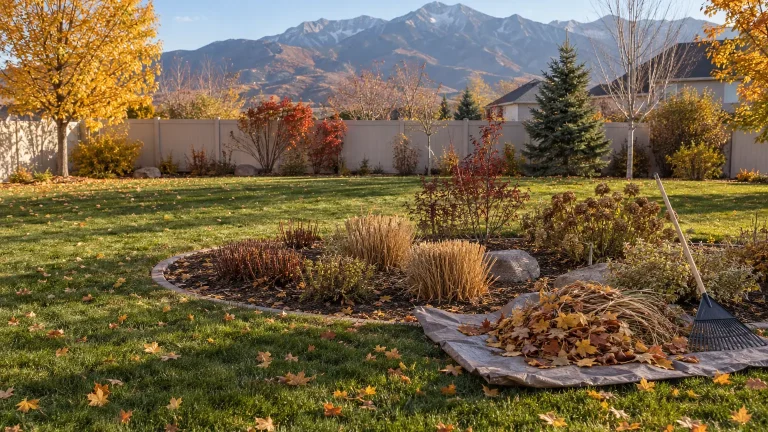
Fall fertilization is equally important here and often underused. A late-season application in September or October, after the summer heat has broken but before the ground freezes, allows Kentucky bluegrass to store carbohydrates in its root system. That stored energy is what drives early green-up the following spring, reducing the temptation to over-fertilize in April. How you handle fall prep, including aeration and cleanup, connects directly to how your lawn performs the following spring, which is something we walk through with clients across our service area each season.
Alkaline pH and the Micronutrient Problem
The alkaline pH that characterizes most West Point soil creates a consistent micronutrient availability problem that straight fertilization cannot solve on its own. Iron deficiency is the most visible symptom, showing up as interveinal chlorosis where the leaf tissue between the veins turns yellow while the veins themselves stay green. Sulfur amendments can help lower pH over time, but results are gradual and require consistent application over multiple seasons.
Chelated iron products applied as a foliar spray offer a faster cosmetic correction, but they address the symptom rather than the underlying soil chemistry. The more durable fix involves improving organic matter content through core aeration and overseeding, which loosens the clay structure, improves drainage, and creates conditions where soil biology can do more of the nutrient cycling work. Compacted clay soils have suppressed microbial communities, and those microbes are what convert organic nitrogen into plant-available forms.
What This Means for How You Manage Your Lawn This Season
Practical lawn fertilization west point utah strategy comes down to a few principles rooted in local conditions. Use slow-release nitrogen products rather than quick-release synthetic fertilizers, which are more likely to burn or leach in clay soil. Time your first application to soil temperature, not calendar date. Include a micronutrient component, particularly iron, in your spring program. And treat aeration as part of your fertilization strategy, not a separate task, because compacted clay limits how effectively any product you apply will actually reach the root zone.
Irrigation management ties directly into this as well. Overwatering clay soil after fertilization pushes soluble nutrients below the root zone faster than in sandy or loam soils. A well-calibrated irrigation system that applies water in shorter, more frequent cycles gives clay soil time to absorb moisture without saturating. That balance between water and nutrient availability is where most West Point lawns either succeed or struggle.
If you want a fertilization program built around what your specific soil is actually doing, rather than a generic schedule, reach out to Sand Dogs Landscaping. We work across West Point and the surrounding areas of West Haven and Farmington, and we can build a plan that connects fertilization with aeration, irrigation, and any soil-correction work your lawn needs.