Fall Yard Cleanup Checklist for Northern Utah Homeowners
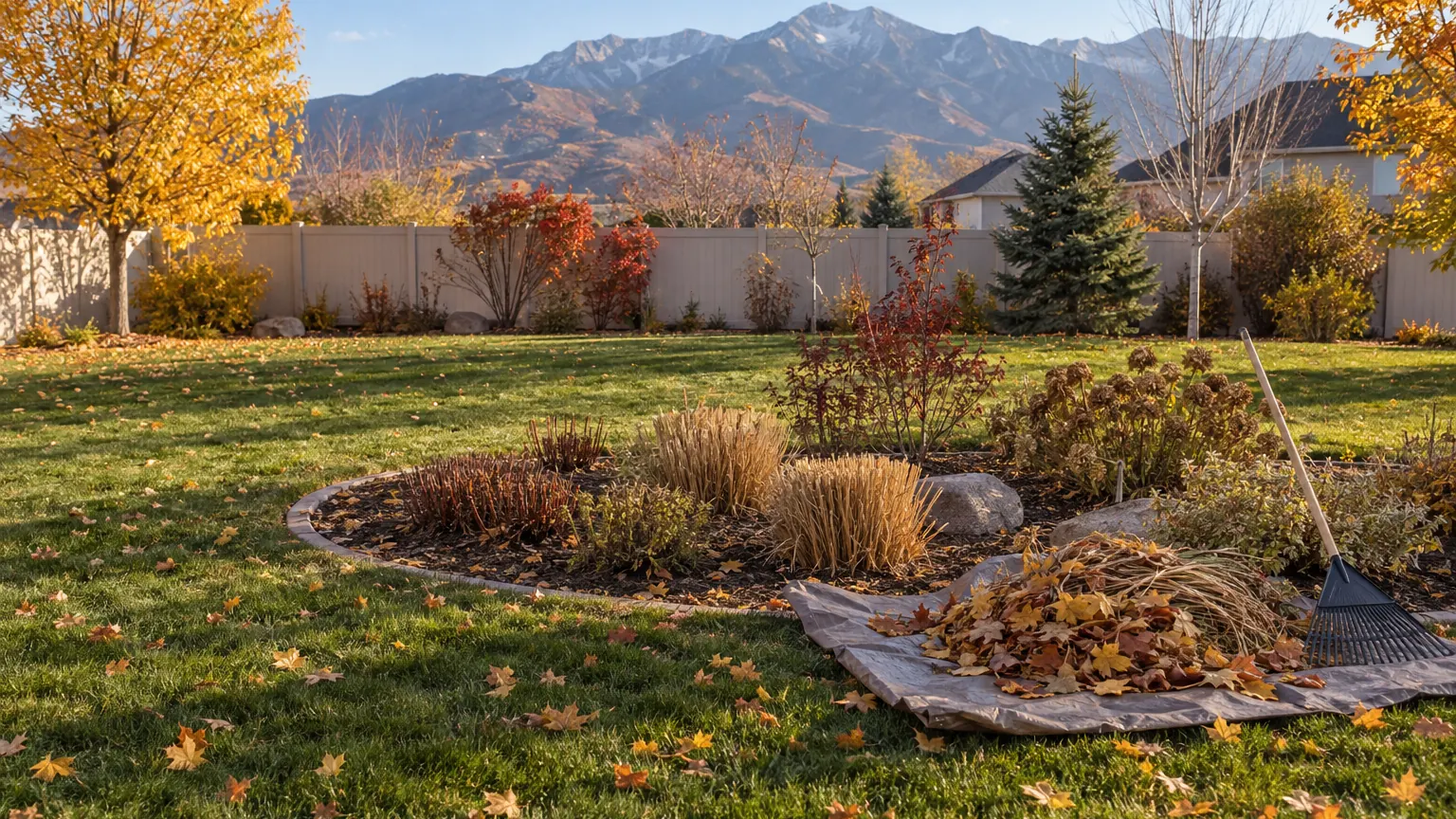
Most Northern Utah yards do best with a main cleanup in late October, once most leaves have dropped, and a lighter second pass in November for late droppers. Finish before snow lands on the leaves. A full cleanup covers leaf removal, cutting back, lawn care, bed cleanup, and irrigation shutdown.
When is the right time for fall cleanup in Northern Utah?
Timing follows the trees and the weather, not the calendar. In the Davis and Weber County valleys, most leaves are usually down by late October or early November, and the first hard freeze often arrives around then too. The exact dates shift from year to year, so watch the forecast more than the date.
Starting too early is a common mistake. If you rake in early October, you are often raking again three weeks later. Ash, maple, and ornamental pear drop at different times, and some trees hold their leaves well into November. One solid cleanup after the bulk of the drop, plus a quick touch-up, beats three half-finished passes.
The other mistake is waiting too long. Wet snow presses leaves into a mat, and a mat of wet leaves is much harder to remove than a dry layer. Aim to be done before the first real snowfall, and always before the irrigation system freezes.
What does a full fall yard cleanup include?
A typical fall cleanup on a residential lot goes in this order:
- Leaves off the lawn and out of the beds. Lawn first, then beds, then hard surfaces like patios, walkways, and driveways.
- Debris cleared from gutters, window wells, and drains. Clogged drains cause trouble when snowmelt has nowhere to go.
- Perennials and ornamental grasses cut back or left standing, depending on the plant (more on that below).
- Dead annuals pulled and spent vegetable or flower beds cleared.
- Shrubs and trees checked for broken or hanging branches that heavy snow could bring down.
- Final mow at a slightly lower setting than summer.
- Irrigation shut down and winterized.
- Hoses, pots, and tools put away.
That list looks long, but on a typical lot most of the time goes to the leaves and the beds. The rest is quick if you do it in the right order, since you do not want to clear the beds and then drag debris back across them.
Should you rake, mulch, or remove leaves from your lawn and beds?
It depends on how many leaves you have.
On the lawn
A thin layer of leaves is fine. Run the mower over them a couple of times and the shredded pieces fall between the grass blades and break down over winter. A thick layer is different. If you can no longer see grass through the leaves after mowing, the lawn will be smothered under snow and you can end up with matted, weak turf and snow mold in spring. Rake or bag those.
In the beds
Some leaf cover in beds is fine, even helpful, around established shrubs and perennials. Shredded leaves act like a light mulch. Whole leaves, especially large ones like maple, tend to mat down and hold moisture against plant crowns. Remove matted leaves from around crowns and from any bed that has a lot of fine, low plants.
Leaves that have piled up against the house, against fences, or along the edges of rock beds should come out. They hold moisture and invite pests against the structure.
Diseased leaves
If a tree or shrub had leaf spot, rust, or another foliar disease this year, bag those leaves instead of mulching them. Mulching can leave disease spores right where the plant will need to fight them next spring.
Which perennials, shrubs, and beds should be cut back now, and which should wait?
There is no single rule, and both fall and spring cutting can work. A few guidelines help:
- Cut back now: perennials that turn to mush after frost, such as hostas and daylilies, and any plant that had disease or pest problems. Removing the foliage removes a winter home for problems.
- Leave until spring: ornamental grasses (they look good in snow and protect their own crown), plants with seed heads that birds use, and marginal perennials that benefit from the extra cover over a cold winter.
- Hold off on heavy pruning of shrubs. Pruning in fall can push tender growth that frost then damages. Dead, damaged, or hazardous branches can come off any time, but save shaping cuts for the right window for each plant. A pruning pro can tell you which plants are which.
Roses and other borderline plants are a judgment call. Clean up fallen leaves and dead canes, and leave most of the structural work for spring.
Weeds are worth a pass too. Pulling them now, before they set seed, means less work in spring. Fresh mulch or rock top-up in the beds can wait until spring, unless you want a tidy look for winter.
What fall tasks protect your lawn and irrigation before the ground freezes?
Fall is one of the most useful times of year for the lawn. Cool-season grasses, which is what most Northern Utah lawns are, put energy into roots this time of year. Practical steps:
- Keep mowing until growth stops, and lower the height a notch for the last couple of cuts, staying within the recommended range for your grass type so you do not scalp it. That keeps long blades from folding over and matting under snow.
- Core aeration helps a lot on compacted soil, which heavier, clay-type soils are prone to. It lets water, air, and fertilizer reach the roots.
- Overseeding thin spots right after aeration gives new seed good contact with soil. It needs to happen early enough in fall for seed to establish, so do not leave it until the leaves are all down.
- A fall fertilizer application feeds roots through winter and supports spring green-up.
Irrigation shutdown is especially time-sensitive, though blocked drains and branches that could fall under snow matter too. Water left in lines, valves, and backflow devices expands when it freezes and cracks fittings and pipes. Sprinkler systems should be blown out and shut down before the first hard freeze, which in many years means sometime in October. Skipping it is how a small cleanup chore becomes a spring repair bill. If you are unsure about the steps, this is a good one to hand to a professional. Drain hose bibs and disconnect and store hoses as well.
When does it make sense to hire a pro for fall cleanup?
Plenty of homeowners handle fall cleanup themselves, and the checklist above is enough to do it well. A pro starts to make sense when:
- You have large or mature trees and the leaf volume is more than a weekend of work.
- The yard is big, sloped, or has many beds.
- Time is short before the first snow and the schedule will not stretch.
- You want several fall tasks, such as irrigation winterization, aeration, and overseeding, done in the right order and on time.
- You would rather not bag, haul, and dispose of a large volume of leaves yourself.
Our Landscape Maintenance service includes fall cleanups and leaf removal as well as a seasonal reset for the yard, and we offer irrigation winterizations, core aeration, overseeding, and lawn fertilization as separate services. Our approach comes from hands-on experience and an understanding of Northern Utah’s climate, soils, and seasonal changes.
If you would like help getting your yard ready before the snow, or just want a second opinion on what your property needs this fall, you are welcome to contact us and ask.
Frequently asked questions
Is it bad to leave leaves on the lawn over winter in Utah?
A thick, wet layer is. It can smother the grass and set up snow mold in spring. A light scattering of leaves is fine, especially if you mow over them to shred them into small pieces first.
Should I cut back perennials in the fall or the spring?
Both can work. Cut back plants that turn mushy after frost and anything that had disease or pests this year. Leave ornamental grasses and plants with seed heads for spring.
Can I mulch leaves with my mower instead of bagging them?
Yes, if the layer is thin enough that you can still see grass after one or two passes. Bag or rake heavy layers and any leaves from diseased plants instead.
How many fall cleanups does a yard usually need?
Most yards need one main cleanup after the bulk of the leaves drop, plus a lighter pass in November for late-dropping trees. Yards with many mature trees may need that second pass to be a fuller cleanup.
What should I do with yard waste after a fall cleanup?
Options vary by city and hauler, so check with your city or county for curbside green waste, drop-off sites, and any seasonal rules. Healthy leaves can also be composted or shredded into beds.