Spring Lawn Cleanup Checklist for Northern Utah Homeowners
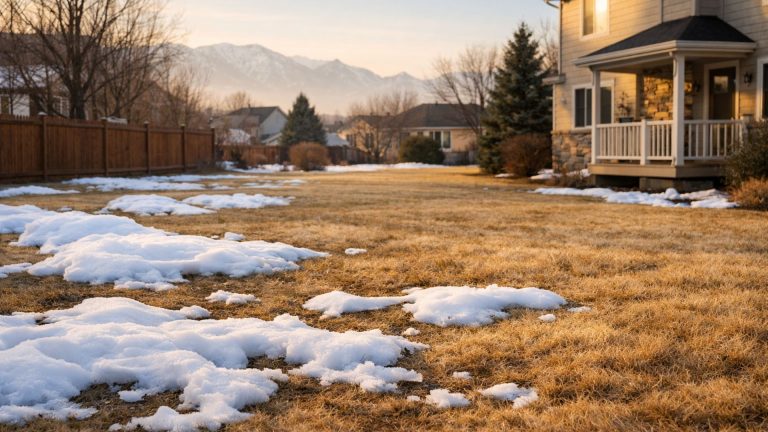
March in Northern Utah means something different every year. Some seasons, we’re still digging out from late snowstorms. Others, the snowpack melts fast and lawns emerge soggy and compacted by mid-month.
Either way, your lawn spent the last four months buried under snow and ice. What’s waiting underneath isn’t always pretty. Dead patches from snow mold. Matted-down turf from heavy snow loads. Vole tunnels zigzagging across your yard. Maybe some mysterious brown spots you don’t remember from last fall.
This is the moment that sets up your entire growing season. Rush into mowing too early, and you’ll compact wet soil and damage crown tissue. Wait too long, and you’re fighting an uphill battle against weeds and thatch all summer. We’re walking you through exactly what to look for, when to act, and how to give your lawn the best possible start this spring. If you missed our earlier guide on getting your lawn ready before the snow clears, that’s a solid place to start for context on where we left off heading into March.
Walk Your Lawn First — Here’s What We’re Looking For
Before you fire up any equipment or start raking, spend 20 minutes actually walking your property. Not just a quick glance from the driveway—we’re talking a slow lap around the entire yard.
Grab your phone and take photos of anything that looks off. You’ll want these later when you’re deciding whether to overseed, treat for disease, or call in help.
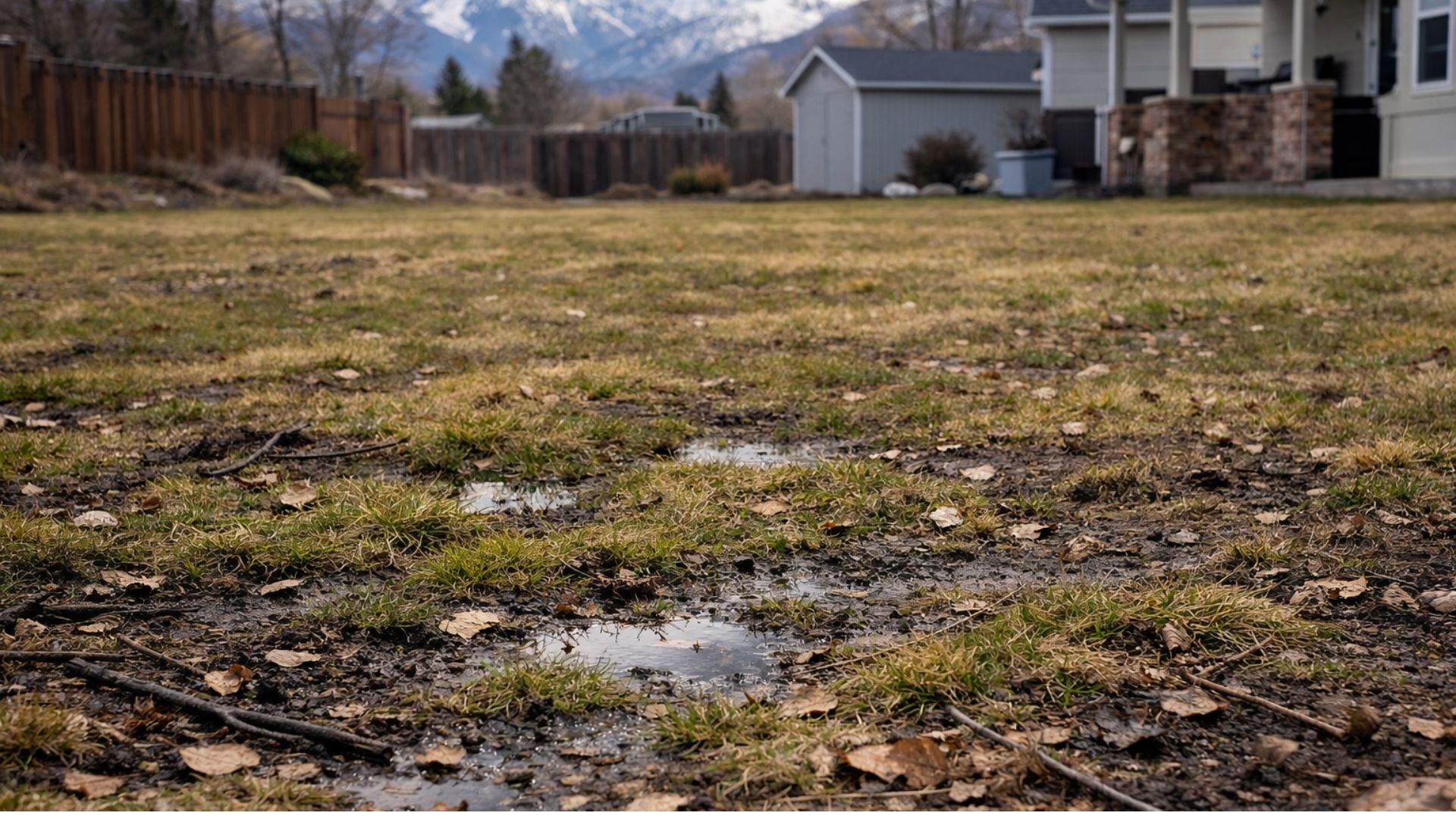
Check soil moisture. Step on the turf in a few different spots. If your footprints fill with water or the soil feels like a wet sponge, it’s too early for cleanup work. In areas around Syracuse and West Haven, clay-heavy soil holds moisture longer than the sandier pockets near Hooper. Wait until you can walk across your lawn without leaving deep impressions.
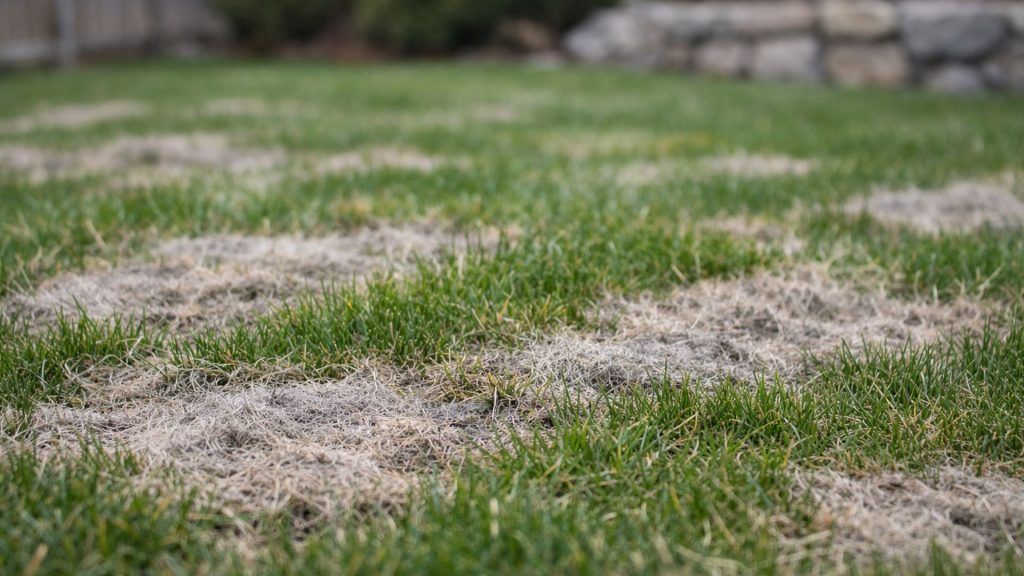
Look for snow mold. This fungal disease shows up as circular patches of matted, grayish-pink grass. It’s incredibly common across Davis and Weber Counties after our wet winters. The good news? Most Kentucky bluegrass and perennial ryegrass lawns recover on their own once temperatures warm up and air circulation improves. Light raking helps, but aggressive treatment usually isn’t necessary.
Spot vole damage. Those surface tunnels and runway patterns aren’t from moles—they’re from voles that spent winter munching on grass crowns under the snow. The tunnels are about two inches wide and leave raised soil lines across your lawn. If you’ve got serious vole damage, you’ll need to level the tunnels, overseed the bare spots, and consider perimeter pest control before next winter.
Identify bare or thin areas. Winter desiccation, salt damage from sidewalks, and heavy foot traffic all create dead zones. Make note of where these are now, because you’ll want to address them before summer heat arrives. Mid-April through early May is prime time for slice seeding in Northern Utah.
The Right Order for Spring Cleanup Tasks
Timing matters. A lot. Here’s the sequence we follow across Kaysville, Farmington, and the rest of our service area.
1. Remove Debris (Late March, When Soil Firms Up)
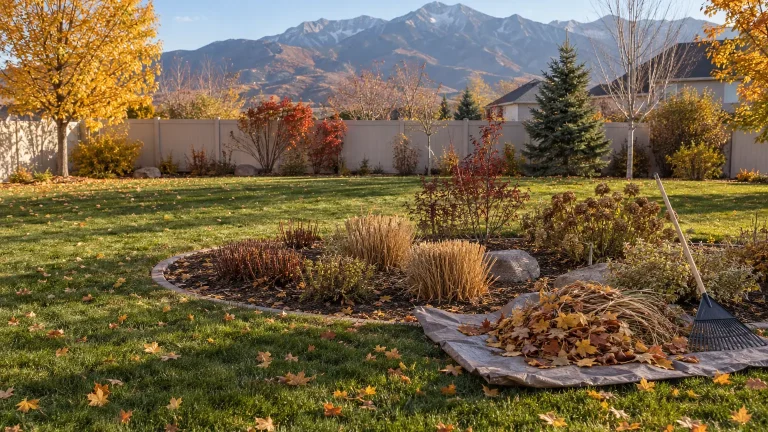
Once the ground is walkable without sinking, clear off leaves, branches, and any leftover winter mess. This isn’t just cosmetic—decaying organic matter blocks sunlight and traps moisture against the soil surface, which encourages fungal problems.
Use a leaf rake or a blower on low setting if the grass is dry. If the turf is still matted from snow, a light raking with a flexible leaf rake helps separate the blades and improve airflow. Don’t break out the dethatching rake yet—save that for when the grass actively starts growing in mid to late April.
2. Assess Drainage and Grade Issues
Spring snowmelt reveals drainage problems you might not notice the rest of the year. Standing water in low spots? Water pooling near your foundation? Soggy areas that stay wet for days after everything else dries out?
These aren’t problems that fix themselves. Poor drainage leads to dead grass, disease pressure, and foundation issues if water’s directed toward your house. We handle a lot of drainage and grading work through our landscaping services in West Point and Clinton this time of year for exactly this reason—homeowners see the problem clearly in March and want it solved before the growing season starts.
If you’ve got persistent wet spots, French drains or regrading work should happen before you invest time and money into lawn renovation.
3. Plan Your First Mow (When Grass Reaches 3.5-4 Inches)
Do not mow just because it’s April and you’re excited. Mowing too early—especially on wet soil—compacts the root zone and stresses turf that’s still waking up from dormancy.
Wait until two conditions are met: soil is firm enough to walk on without leaving deep tracks, and grass has actually started growing and reached about 3.5 to 4 inches in height.
When you do mow, follow the one-third rule. Never remove more than one-third of the blade height in a single cut. If your lawn got ahead of you and it’s five inches tall, mow to 3.5 inches, wait a few days, then mow again to your target height of 2.5 to 3 inches.
Mulch your clippings back into the lawn—they return nitrogen and organic matter to the soil. Just make sure your mower blade is sharp. Dull blades tear grass instead of cutting it cleanly, which opens the door for disease.
4. Core Aeration (Mid to Late April, Typically)
If your lawn is compacted from winter snow load, foot traffic, or just years of settling, core aeration is the single most impactful thing you can do. This mechanical process pulls out plugs of soil, creating channels for air, water, and nutrients to reach the root zone.
Heavy clay soils across much of Northern Utah benefit enormously from aeration. We see the best results when aeration happens just as grass enters its active spring growth phase—usually mid-April around here, though it shifts a bit depending on how warm March was.
Pair aeration with overseeding for the best results. Seed dropped right after aeration falls into those open channels, getting excellent soil contact without extra work.
When to Call in Professional Spring Cleanup Help
Some spring tasks are genuinely DIY-friendly if you’ve got the time and tools. Others? They’re just easier and more effective when handled by a crew with the right equipment and experience.
You should consider professional spring cleanups if:
- Your property is larger than a quarter-acre and spring cleanup feels like a multi-weekend project
- You’ve got significant debris, large branches, or landscape bed cleanup that requires hauling
- Drainage issues need assessment and correction before you can address turf health
- You want core aeration and overseeding done right, with commercial-grade equipment
- Snow mold damage is extensive and you’re not sure whether you’re looking at a recoverable lawn or a full renovation project
Our professional landscape maintenance services cover debris removal, light dethatching, bed edging, mulch installation, and lawn assessment. We’ll walk your property with you, point out what we’re seeing, and give you a realistic picture of what your lawn needs—not a sales pitch for stuff it doesn’t.
If you’re in Layton, Plain City, or anywhere across Davis and Weber counties, reach out by early to mid-March. Spring cleanup books up fast once weather breaks.
What About Fertilization and Weed Control?
Here’s where we see homeowners jump the gun every spring. The garden centers start stocking fertilizer in February, so folks assume it’s time to apply. Not quite.
Your lawn needs to be actively growing before fertilizer makes any sense. Throwing nitrogen on dormant turf in early March just feeds weeds and washes into storm drains when snowmelt and spring rains hit.
Wait until mid-April at the earliest for your first fertilizer application. Soil temps should be consistently above 55°F, and grass should be green and actively putting on growth. That’s when roots can actually take up and use the nutrients you’re applying.
Pre-emergent weed control is time-sensitive, though. It needs to go down before soil temps hit 55°F consistently—usually late March to early April around here. Pre-emergent creates a barrier in the soil that prevents weed seeds (especially crabgrass) from germinating. Miss the window, and you’re stuck with post-emergent control all summer, which is more expensive and less effective.
If lawn care programs and treatment timing feel overwhelming, that’s what we’re here for. Our lawn fertilization and weed control programs take the guesswork out of what to apply and when, so you get results without the stress of managing a spray schedule.
Don’t Skip the Irrigation System Check
Your irrigation system has been dormant since October or November. Before you need it in May, you need to know it actually works. For a deeper look at how winter conditions affect your system year to year, our Northern Utah winter landscape planning guide covers what to document before the season ends so spring startup goes smoother.
Check for cracked lines, broken sprinkler heads, and leaks. Even small leaks waste thousands of gallons over a season and create swampy spots that kill grass and invite weeds.
If you had your system professionally winterized last fall (which you should have in Northern Utah—our freeze-thaw cycles are brutal on irrigation lines), it’s still worth doing a startup check. We find issues during irrigation startups all the time: heads that shifted over winter, zones that aren’t getting coverage, controllers that glitched or lost programming.
A spring irrigation startup and inspection in March or early April means you catch problems before you’re trying to keep your lawn alive in July. Our irrigation repair and maintenance services cover startup inspections, broken head replacements, and zone adjustments across Farmington, West Point, and the surrounding area—it’s easier to fix a broken head now than to deal with a dead lawn later.
March isn’t glamorous. Your lawn probably doesn’t look great right now. But the work you put in over the next few weeks—or the help you bring in to do it right—determines whether you’re fighting problems all season or actually enjoying your yard come June.
Start with that walk-through. Take photos. Make a list. If what you’re seeing feels manageable, tackle it in stages as the soil dries out. If it feels like more than you want to deal with, learn more about who we are and how we work or give us a call at (385) 503-5266. We’ll come take a look, walk you through what we’re seeing, and give you a straight answer about what your lawn actually needs.
Spring cleanup is our busy season, but it’s also when we see lawns make the most dramatic turnarounds. Let’s make sure yours is one of them.