Pergolas in Syracuse, UT: Adding Shade and Structure to Your Backyard
By mid-summer, most Syracuse backyards have found their weak point: the patio that’s too hot to sit on by 2pm, the deck with no relief from direct sun, the outdoor kitchen that only gets used in the early morning or after dark. A pergola is one of the most direct ways to fix that, and it does it without turning your yard into a fully enclosed structure.
At Sand Dogs Landscaping, pergolas are one of the landscaping services we build out for properties across Syracuse, West Point, and the rest of our Davis and Weber County service area. Here’s what actually goes into a pergola project and what to think through before building one.
What a Pergola Actually Does for Your Yard
A pergola isn’t just a shade structure. Its open framework filters sunlight rather than blocking it completely, which keeps a space bright without the full-sun exposure that makes a patio unusable in July and August. It also gives a backyard visual structure, marking out a defined outdoor living area even in a large or oddly shaped lot.
For a lot of Syracuse properties, that structure matters. Larger lots and newer developments often have wide, open backyards without much natural shade from mature trees. A pergola creates usable shade years faster than waiting on a tree to grow in.
Attached vs. Freestanding
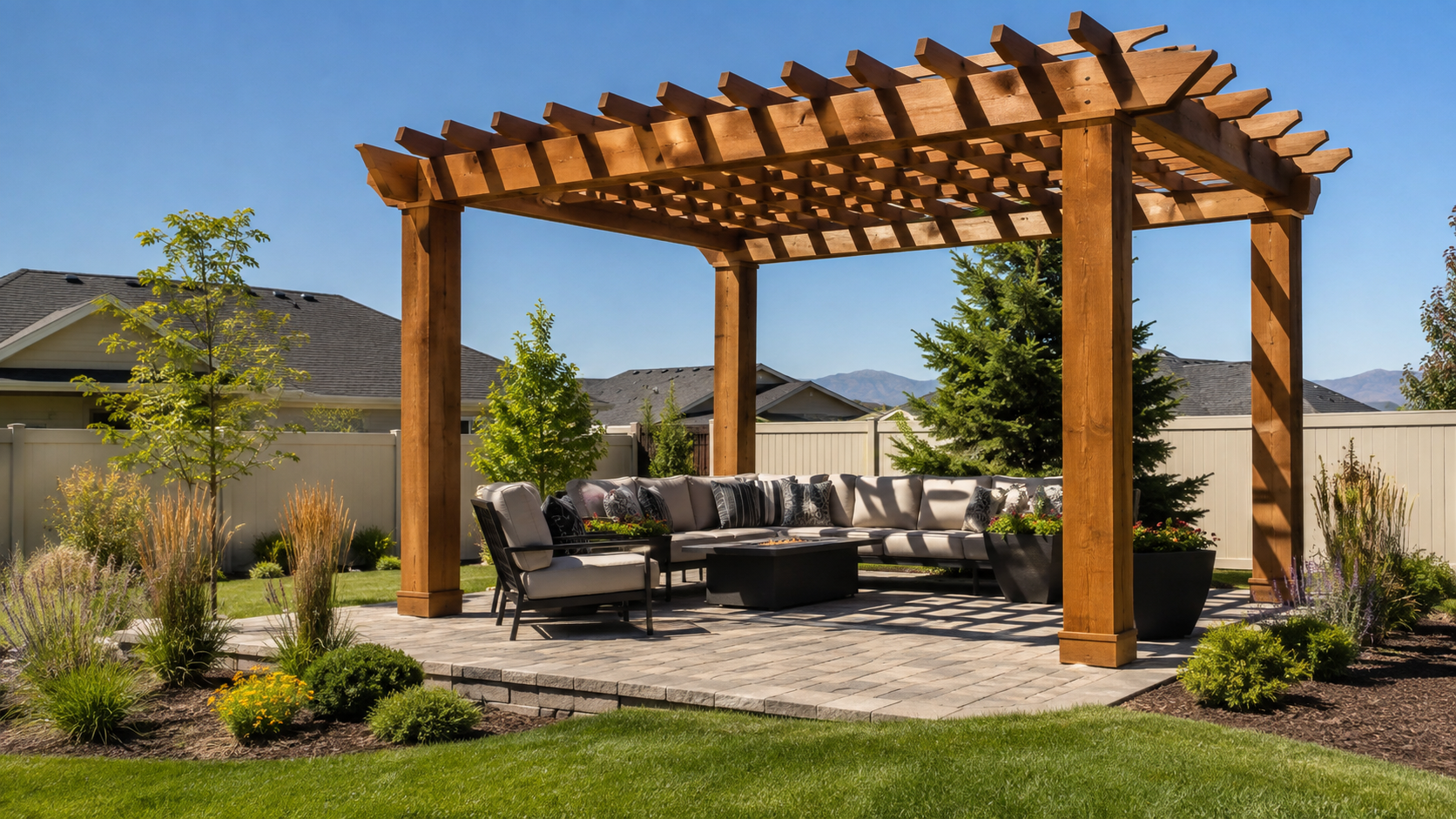
Pergolas built off the house extend an existing patio or entry and tend to work well when the goal is to create a covered transition between indoor and outdoor space. Freestanding pergolas are placed further into the yard, often over a fire pit, seating area, or outdoor kitchen, and work better when the goal is a separate destination rather than an extension of the house.
Planning a Pergola for Northern Utah Conditions
A few local factors shape how a pergola should be built here, not just how it looks.
- Wind exposure. Northern Utah gets seasonal wind events strong enough to stress lightweight structures. Post spacing, footing depth, and material choice all affect how well a pergola holds up over time.
- Snow load. Even an open-slat pergola roof needs to be built to handle winter snow accumulation without sagging or warping.
- Sun angle. Utah’s summer sun sits high and direct. Rafter spacing and orientation affect how much actual shade a pergola provides during peak afternoon hours, not just how it looks from the ground.
- Soil and footings. Clay-heavy soil common throughout Syracuse can shift with seasonal moisture changes, so footings need to be set at a depth that keeps posts stable long term.
Material Options
Wood
Wood pergolas offer a natural look that blends easily with existing landscaping and hardscaping. They do require periodic staining or sealing to hold up against Utah’s sun exposure and temperature swings.
Vinyl and Composite
Lower-maintenance options that hold their color and shape with less upkeep, often at a higher upfront cost than wood.
Metal and Aluminum
Durable and low-maintenance, with a cleaner, more modern profile that pairs well with contemporary patio and outdoor kitchen designs.
Pergolas vs. Other Shade Options
Retractable awnings and shade sails are lower-cost ways to add shade, but they come with tradeoffs. Shade sails typically need to be taken down seasonally and don’t hold up as well to Utah’s wind gusts and winter snow load. Awnings work well for shade close to the house but don’t do much for a freestanding seating area further into the yard. A pergola costs more upfront but is a permanent structure that adds long-term value and doesn’t need to be stored or replaced every few seasons.
Some homeowners also add a retractable canopy or shade cloth to a pergola frame for extra sun coverage during the hottest part of the day, while keeping the open, airy look the rest of the year.
What to Expect From a Pergola Project
A typical pergola project moves through a few clear stages:
- Site evaluation. Sun exposure, existing hardscaping, and yard layout are assessed to determine placement and size.
- Design and material selection. Style, material, and dimensions are chosen to fit the property and how the space will be used.
- Footings and structural build. Posts are set at a depth appropriate for local soil and expected load, then the frame and roof structure are built out.
- Finishing details. Depending on the project, this can include staining, lighting, or integration with an existing patio or outdoor kitchen.
Sizing a Pergola for Your Space
A pergola that’s too small ends up feeling like an afterthought, while one that’s oversized can crowd a smaller backyard or overwhelm the rest of the landscaping. As a general guideline, a pergola should be sized to comfortably cover the furniture or feature underneath it, whether that’s a dining set, a lounge area, or a fire pit, with enough clearance around the edges that the space doesn’t feel boxed in.
Ceiling height matters too. A pergola built too low can make a patio feel enclosed rather than open, while one built too tall can lose some of its shading effect. On most residential projects, post height is set to feel proportional to the house and existing patio rather than following a single fixed standard.
Pairing a Pergola With the Rest of Your Yard
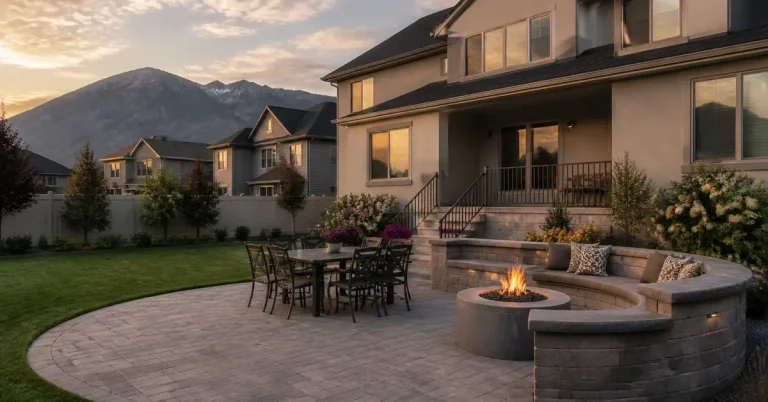
Pergolas rarely function best in isolation. Many Syracuse projects pair a pergola with an existing or planned patio, fire pit, or outdoor kitchen, using the structure to anchor the whole outdoor living space rather than standing on its own in an open lawn. If you’re planning a broader backyard update, it’s worth thinking about pergola placement alongside hardscaping and plantings from the start rather than adding it in as an afterthought.
Frequently Asked Questions
Does a pergola actually keep a patio cooler?
Yes, though the amount depends on rafter spacing and orientation. A well-placed pergola noticeably reduces direct sun exposure during peak afternoon hours, even without an added shade cover or retractable canopy.
Do pergolas need a permit in Syracuse?
Permit requirements vary by city and by the size and attachment method of the structure. It’s worth checking with your local building department or HOA before starting a project.
How long does a pergola take to build?
Timelines vary based on size, material, and site conditions, but most residential pergola projects are completed in a matter of days once footings are set and materials are on site.
Can lighting be added to a pergola?
Yes. String lighting, post-mounted fixtures, or integrated lighting can be added to extend how late into the evening the space gets used, and it’s often easiest to plan for during the initial build.
Planning a Pergola Project in Syracuse
If your backyard needs shade, structure, or just a defined space to actually use through the summer, a pergola is worth considering as part of your landscaping plan. Contact Sand Dogs Landscaping to talk through what would work for your property, or see how a pergola fits into a larger project on our landscaping services page.