Natural Privacy Fences in Clinton, UT: Adding Privacy Without Losing Your Yard’s Character
As Clinton continues to fill in with newer subdivisions, lot lines have gotten closer and backyards more visible than they used to be. That shift is a big part of why privacy fencing comes up so often in landscaping conversations, especially heading into peak outdoor living season when a backyard actually gets used for entertaining, kids, or pets.
At Sand Dogs Landscaping, natural privacy fences are one of the landscaping services we install for properties throughout Clinton, West Point, and the rest of our Davis and Weber County service area. Here’s what to think through if you’re considering one.
Why “Natural” Privacy Fencing
Not every privacy fence needs to look like a vinyl subdivision fence. Natural material fencing, typically wood, is chosen by a lot of homeowners specifically because it blends into existing landscaping rather than standing out from it. A cedar or wood-toned fence tends to read as part of the yard’s design rather than a barrier bolted onto the edge of it, which matters on properties where the landscaping itself is a focal point.
Where It Fits Best
Natural fencing tends to work particularly well around patios, pool areas, and garden beds, where the goal is privacy without a stark visual break between the built structure and the plantings around it.
What to Consider Before Installing
Height and Placement
Fence height affects both privacy and how much sun reaches nearby plantings or lawn areas. Placement also matters for maintaining clear sightlines at driveways and property corners, which many Clinton properties need to account for depending on lot layout.
Material and Maintenance
Wood fencing offers the most natural appearance but requires periodic staining or sealing to hold up against Northern Utah’s sun exposure and seasonal moisture swings. Some homeowners choose a wood-look composite instead, trading a small amount of authenticity for lower long-term upkeep.
Soil and Post Setting
Clinton’s clay-heavy soil shifts with seasonal moisture, which makes proper post depth and footing important for keeping a fence line straight and stable over time. Shortcuts here tend to show up a few years later as leaning posts or gaps at the base.
HOA and Property Line Rules
Many Clinton neighborhoods have HOA guidelines around fence height, material, and style, and property lines should be confirmed before construction begins. This is worth checking early, before materials are ordered.
Natural Fencing vs. Vinyl vs. Living Screens
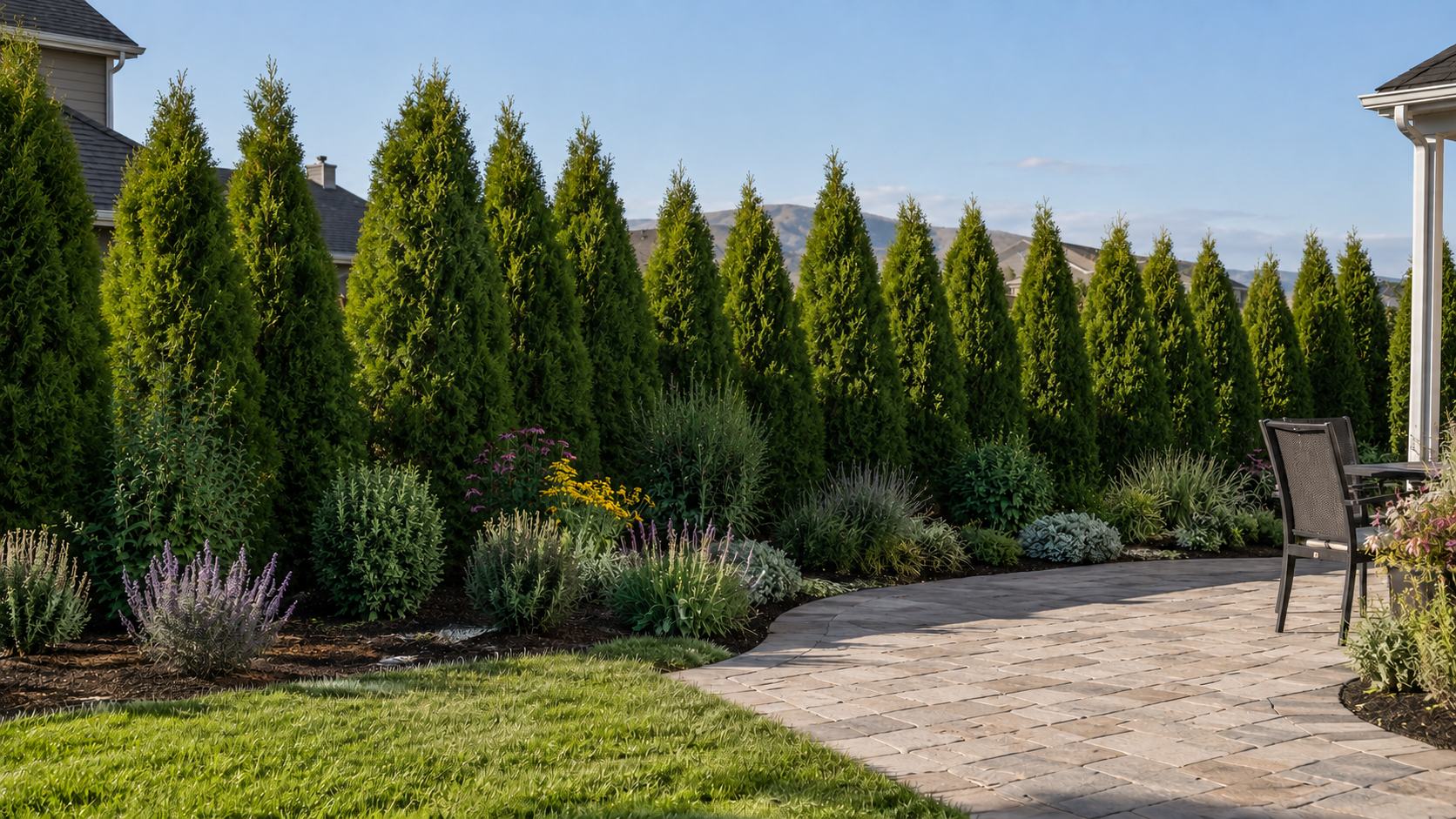
Vinyl fencing is low-maintenance and consistent in appearance, but it can look out of place on properties with more natural, layered landscaping. Living screens, hedges or dense plantings used for privacy, blend seamlessly into a landscape but take years to fill in and provide effective coverage, and offer less consistent privacy in winter if deciduous plants are used.
Natural wood fencing sits in between: it provides privacy immediately, like vinyl, while still reading as part of the landscape rather than a manufactured barrier. For many Clinton properties, it’s the option that balances immediate function with the look homeowners actually want.
What to Expect From a Privacy Fence Project
- Site and boundary review. Property lines, existing structures, and HOA requirements are confirmed before design begins.
- Material and style selection. Wood species, height, and fence style are chosen to match the property and how the space will be used.
- Post setting. Posts are set at a depth suited to local soil conditions to keep the fence line stable long term.
- Panel installation and finishing. Panels are installed and, if applicable, stained or sealed for weather protection.
Common Layout Mistakes to Avoid
A few issues come up repeatedly on privacy fence projects that weren’t planned carefully from the start:
- Building too close to the property line. Setbacks and easements should be confirmed before construction, not after posts are already set.
- Ignoring drainage. A fence line that blocks natural water flow across a yard can cause pooling or erosion during heavy rain or snowmelt.
- Ignoring gate placement. Gates should be planned around how the yard is actually used, including equipment access for future landscaping or maintenance work.
- Choosing height without checking rules first. Ordering materials before confirming HOA or city limits can mean re-ordering or re-cutting panels later.
Privacy Fencing as Part of a Bigger Landscaping Plan
A privacy fence rarely stands alone on a well-planned property. It’s common to install one alongside a patio, plantings, or a broader landscape redesign so the fence line, garden beds, and hardscaping all read as one cohesive space rather than separate additions. If you’re planning any other landscaping work this year, it’s worth discussing fence placement at the same time rather than fitting it in afterward.
Fence Styles Worth Considering
Not every natural privacy fence needs to be a solid, uniform wall of wood. A few style variations come up often on Clinton properties:
- Board-on-board. Overlapping vertical boards provide full privacy from both sides with a clean, finished look, and hold up well against wind since gaps allow some airflow through the structure.
- Shadowbox. Alternating boards on either side of the rails create partial visibility and airflow while still limiting a direct line of sight, often used where full blockage isn’t necessary or desired.
- Horizontal board. A more modern look that pairs well with contemporary home exteriors and updated landscaping designs.
Style choice often comes down to how much airflow and partial visibility a homeowner wants versus complete privacy, and how the fence should read against the rest of the property’s design.
Frequently Asked Questions
How tall can a privacy fence be in Clinton?
Height limits vary by zoning and HOA rules, so it’s worth confirming local requirements before finalizing a design.
How long does a wood privacy fence last?
With regular staining or sealing, a well-built wood fence can hold up for many years, though exposure to sun and moisture will affect the maintenance schedule.
Can a privacy fence be added alongside other landscaping work?
Yes. Fencing is often installed as part of a broader landscaping project, or completed as a standalone addition to an existing yard.
Can plantings be added along a privacy fence?
Yes. Shrubs, climbing plants, or garden beds along a fence line soften its appearance and help it blend further into the landscape, though plant placement should account for root growth near the fence posts.
Planning a Privacy Fence Project in Clinton
If your backyard could use more privacy without losing the look of your existing landscaping, a natural fence is worth considering. Contact Sand Dogs Landscaping to talk through what would work for your property, or see how fencing fits into a larger project on our landscaping services page.