Fall Planting in Layton, UT: Why September Is the Best Window for Trees, Shrubs & Perennials
If you’re picturing planting season as a spring-only job, Northern Utah’s climate says otherwise. In Layton and the surrounding Davis County communities, fall is one of the most reliable windows for putting new trees, shrubs, and perennials in the ground, and the reasons come down to soil temperature, root development, and what your landscape is doing below the surface once the summer heat backs off.
At Sand Dogs Landscaping, plantings and softscapes are part of how we build out full landscaping projects for properties throughout Layton, West Point, Clinton, Syracuse, and the rest of our Davis and Weber County service area. Here’s what to know if you’re weighing a fall planting project this year.
Why Fall Planting Works in Layton’s Climate
Layton sits in a region with hot, dry summers and cold winters, and that swing matters for how plants establish. Once air temperatures cool in September and October, soil temperatures stay warmer for several more weeks. That combination of mild soil and cooler air lets roots keep growing without the plant fighting summer heat stress at the same time.
A tree or shrub planted in fall spends the next several months focused on root development instead of pushing new top growth. By the time spring arrives, it’s already anchored and better positioned to handle its first real Utah summer.
Soil Conditions to Plan Around
Northern Utah’s clay-heavy, often alkaline soil holds water differently than looser soils, and it can compact if it’s worked while too wet or too dry. Fall planting gives us a window to prepare beds properly, amending soil, checking drainage, and setting root balls at the right depth, without racing spring’s tighter installation schedule.
What to Expect From a Fall Plantings & Softscapes Project
Every property is different, but a typical fall planting project follows a similar sequence:
- Site and soil assessment. We look at sun exposure, existing drainage, and soil condition before recommending plant selections.
- Plant selection suited to the region. Trees, shrubs, and perennials are chosen for their ability to handle Northern Utah’s soil, water availability, and seasonal swings, not just how they look at the nursery.
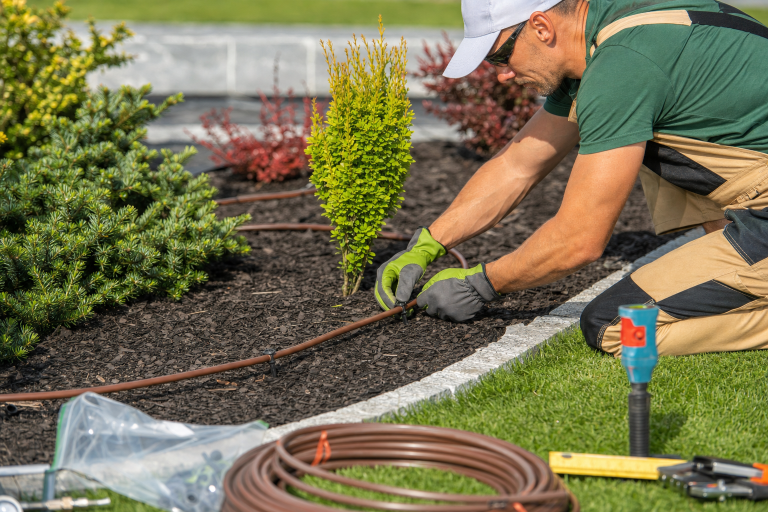
- Proper placement and installation. Spacing, depth, and positioning affect long-term health as much as the planting itself.
- Watering guidance through establishment. New plantings need a different watering routine than established landscaping, especially heading into winter.
Fall Planting vs. Spring Planting
Spring gets most of the attention as “planting season,” but it comes with its own challenges in Northern Utah. Spring soil is often saturated from snowmelt, which limits the days available for proper installation, and new plantings have to establish roots while also pushing new growth right as summer heat approaches. That’s a lot to ask of a plant in its first season.
Fall planting spreads that work out. Roots get a head start while the plant isn’t under pressure to leaf out or bloom, and by the time next summer’s heat arrives, the plant has had months to settle in rather than weeks. Spring planting still has its place, particularly for plants that are sensitive to winter cold while young, but for most trees and many shrubs, fall is the stronger option in this climate.
Trees, Shrubs, and Perennials: Timing Differences
Not everything on a property needs to go in the ground at the same time, and fall isn’t a single deadline. It’s a window.
Trees and Shrubs
Woody plants generally benefit most from fall planting because their root systems have the longest runway to establish before summer heat returns. Getting plants in earlier in fall, before the ground starts to cool significantly, gives roots more active growing time.
Perennials
Many perennials also do well planted in fall, though timing can be more specific depending on the variety. Some benefit from getting settled before the first hard frost; others are better held for spring. This is where a plant selection suited to the property and its conditions matters more than a generic planting calendar.
Protecting New Plantings Through Winter
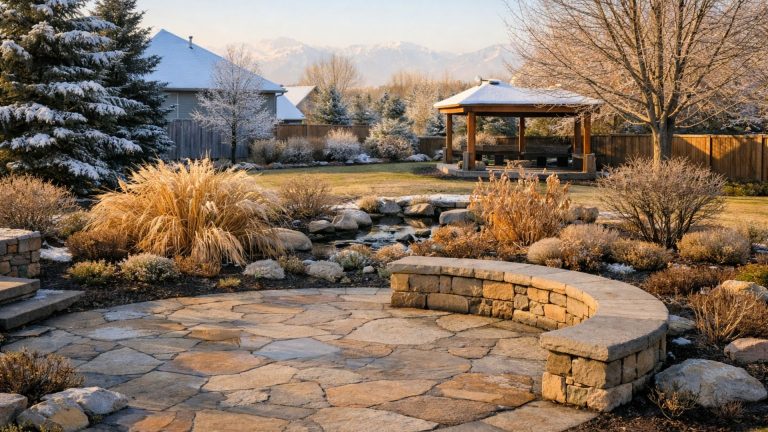
Getting a plant in the ground is only the first step. New root systems in Layton’s clay soil need some support through their first winter to make the most of a fall planting.
- Mulch around the base. A layer of mulch over the root zone helps regulate soil temperature and retain moisture as the weather turns colder, without piling mulch directly against trunks or stems.
- Taper watering, don’t stop it. Even as irrigation systems shut down for winter, new plantings usually need occasional deep watering on warmer days until the ground freezes solid.
- Check for wind and sun exposure. Newly planted trees and shrubs can be more vulnerable to winter sun scald and drying wind than established plants, particularly on more exposed lots.
- Watch for frost heave. Freeze-thaw cycles can push shallow-rooted new plantings partially out of the soil. A walk-through after hard freezes helps catch this early.
How Fall Plantings Fit Into a Larger Landscaping Plan
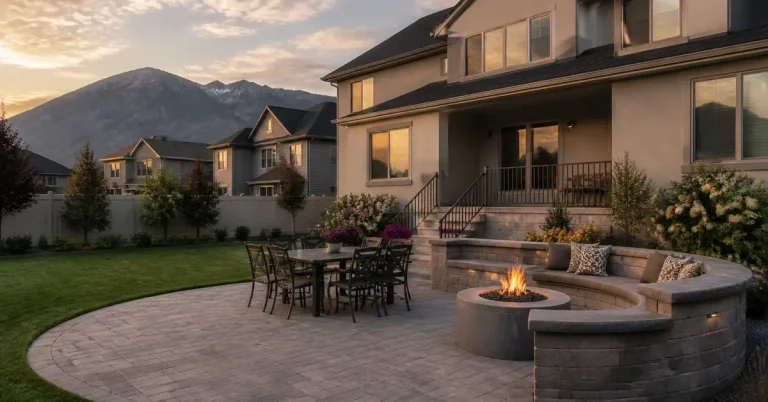
Plantings and softscapes rarely stand alone. On many Layton properties, new plant material is part of a broader landscaping project, paired with grading and drainage work, a new landscape design, or hardscaping like patios and retaining walls already in place. Planning plantings around the rest of the property helps avoid conflicts later, like root systems competing with irrigation lines or new beds settling unevenly next to hardscape edges.
If you’re not planning a full landscape overhaul this fall, that’s fine too. Plantings can be added as a standalone project to fill in bare areas, add privacy, or refresh beds that have thinned out over the years.
Frequently Asked Questions
Is it too late to plant once October ends?
It depends on the plant and the year’s weather, but the safest approach is to get plantings in the ground while soil is still workable and before hard frost sets in consistently. Once the ground starts to freeze, root establishment slows significantly.
Do new plantings need extra water going into winter?
Yes. Newly planted trees, shrubs, and perennials need consistent moisture through fall to support root establishment, even as regular irrigation schedules wind down for the season.
Can fall plantings be combined with other landscaping work?
Often, yes. Fall plantings can be scheduled alongside grading, drainage, or design work as part of a larger project, or completed on their own.
How far in advance should a fall planting project be scheduled?
Earlier is better. Scheduling in late summer or early fall leaves more usable time before the ground cools, and it gives more flexibility around plant selection and site prep than waiting until later in the season.
Planning a Fall Planting Project in Layton
If you’re considering trees, shrubs, or perennials for your Layton property this fall, the window to plan is now, while there’s still time to prepare the site properly before the ground cools. Contact Sand Dogs Landscaping to talk through what would work best for your property, or take a look at our full landscaping services to see how plantings fit into a broader project.