Yard Grading in West Point, UT: How Proper Drainage Starts with Slope
Properties along the western bench of Davis County sit on some of the heaviest clay soil in northern Utah, and that geology drives a lot of the drainage problems we see every spring. If you own a home in West Point, UT, you have probably noticed standing water after a heavy rain, soft spots in your lawn that never fully dry out, or moisture collecting near your foundation. These are not random problems. They are almost always the result of improper slope, compacted soil, or original grading that was never finished correctly after construction. Yard grading west point ut is one of the most frequently requested services we handle this time of year, and for good reason. April snowmelt and spring rain put every drainage flaw on full display.
What Yard Grading Actually Involves
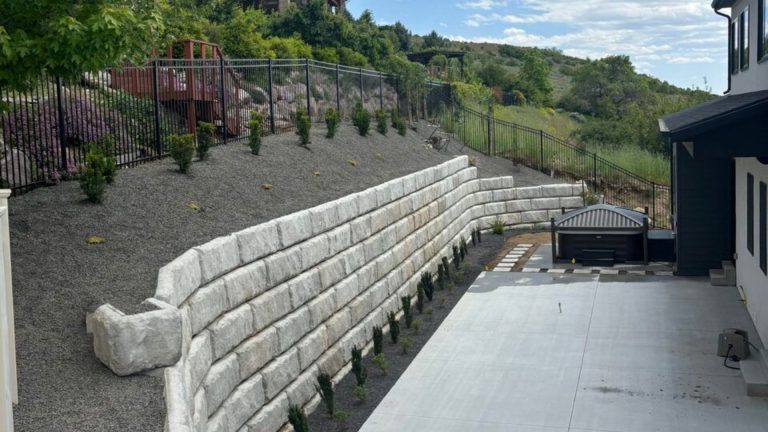
Grading is the process of reshaping the surface elevation of your yard so that water moves away from structures and toward appropriate drainage points. That sounds straightforward, but the execution involves a lot of variables. We start by reading the existing slope of the property, identifying low spots, and locating where water is currently pooling or flowing in the wrong direction. On most residential lots in West Point, the goal is to establish a minimum slope of about two percent away from the foundation, which works out to roughly two inches of drop for every ten feet of horizontal distance.
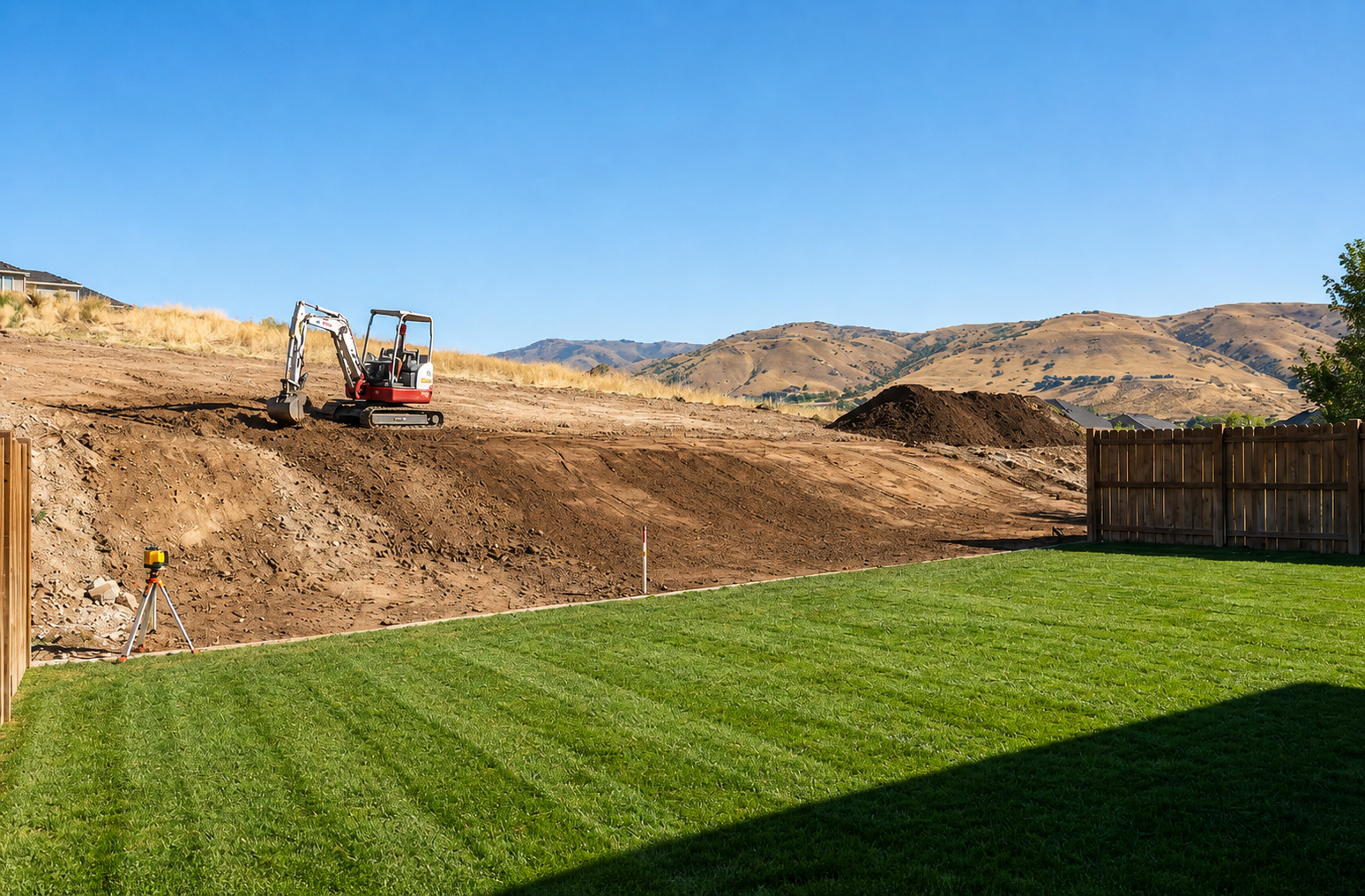
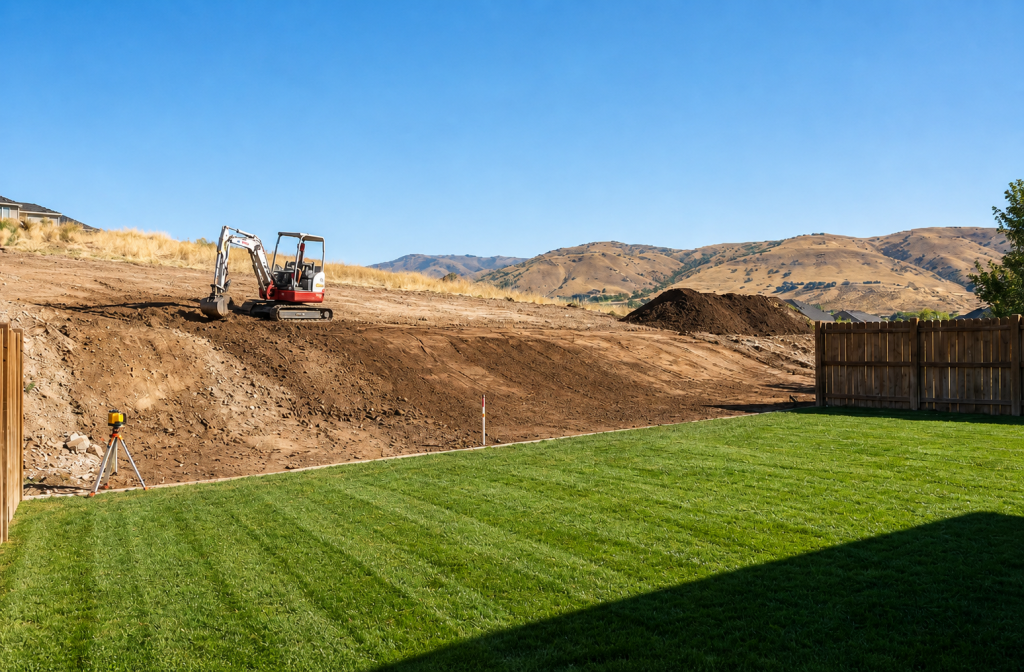
Depending on the scope of the job, we use a combination of equipment to move and redistribute soil. Smaller residential jobs typically involve a skid steer or compact track loader, which gives us the maneuverability to work close to fences, beds, and structures without causing unnecessary damage. Larger lots or more significant elevation changes may call for a mini excavator to cut down high spots and build up low areas before we finish-grade with hand tools and laser levels. Every job ends with compaction to prevent settling, and most grading projects connect naturally to other work like landscape installation, sod laying, or drainage system additions.
Why Yard Grading West Point UT Requires a Different Approach Than Other Areas
The clay-heavy soil that runs through West Point and into neighboring Farmington does not behave like sandy or loamy soil. General soil guidance from the Utah State University Extension yard and garden program is useful here too, especially if you are trying to understand why clay soil stays saturated so much longer than people expect. It expands when wet, contracts when dry, and compacts under its own weight over time. When we bring in fill material to build up a low area, we have to account for the fact that native clay and imported fill will settle at different rates if they are not properly blended and compacted in lifts. Skipping that step is one of the most common reasons grading work done during original home construction fails within a few years.
We also see a lot of properties near the I-15 corridor and the newer developments off of 300 West where builders graded quickly to meet project timelines, leaving final grades that technically passed inspection but were never optimized for long-term drainage. The result is a generation of homes with chronically wet basements, heaving concrete, and lawn areas that stay saturated well into May. If any of that sounds familiar, our post on sod installation and local clay soil covers some of the same underlying issues from a different angle.
Spring is also when the frost line releases. The ground in West Point typically freezes to a depth of 18 to 24 inches through the winter, and as it thaws from the top down, the soil becomes temporarily unstable. We factor that into our scheduling. Grading on fully saturated, partially frozen soil leads to poor compaction and uneven settling later. We watch soil conditions carefully in April before committing to final grades, especially on larger projects.
How to Know When Your Yard Needs Regrading
The clearest sign is standing water that persists for more than 24 to 48 hours after a rain event. But there are subtler indicators worth paying attention to. If your lawn has a consistently soft or spongy section that never fully firms up, the soil below is likely staying wet due to a drainage problem that grading alone, or grading combined with a French drain system, can correct. Cracks running along your foundation, efflorescence on basement walls, and doors or windows that stick seasonally can all trace back to moisture pressure caused by improper slope.
Erosion is another indicator. If you are losing topsoil from certain areas of your yard every time it rains, or if you have visible ruts forming along the same path repeatedly, water is concentrating and moving with enough force to carry material with it. That points to a slope that is either too steep in one direction or funneling water into a single point without a proper outlet.
What to Expect During a Yard Grading Project
Scheduling yard grading west point ut correctly starts with understanding what the process actually looks like on the ground. We always recommend calling 811 before any project that involves trenching, excavation, or aggressive regrading so utilities are marked before equipment arrives. Most residential grading jobs in West Point take one to three days depending on lot size and complexity. We begin with a site walk to confirm the scope, mark any underground utilities through Blue Stakes Utah, and identify access points for equipment. The actual grading work typically happens in a single mobilization, followed by a compaction pass and a final check with a level to confirm positive drainage across the whole area.
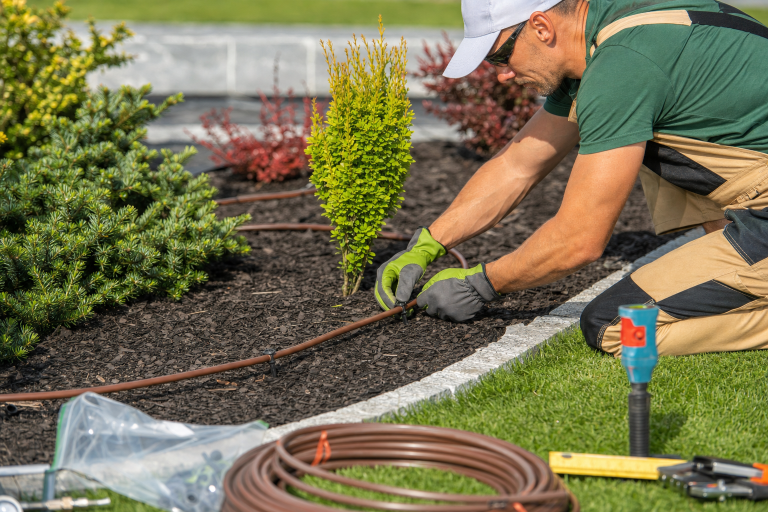
If the project connects to other services like irrigation installation or lawn care after the fact, we coordinate sequencing so that grading is completed and settled before any planting or seeding takes place. Trying to seed or sod over freshly moved soil without giving it time to settle is a shortcut that creates more problems than it solves. Our spring lawn cleanup checklist covers how to prepare the rest of your yard around the same timeframe if you are doing multiple projects this season.
Yard grading west point ut is most effectively scheduled in late April through early June, once the soil has thawed completely and dried enough to compact properly, but before summer heat sets in and makes reestablishing grass more difficult.
If your yard showed drainage problems this spring, schedule a site assessment with Sand Dogs Landscaping. We can confirm where the slope is failing, recommend any drainage add-ons that actually help, and get the yard ready for sod, seeding, or the next phase of work.