Irrigation Repair Kaysville UT: Common System Fixes
If you’ve spent any time digging around a property near West Point, UT, you already know what the ground feels like in July: baked on top, dense and sticky just a few inches down. That same clay-heavy soil that makes drainage tricky all spring is now cracking at the surface while your irrigation system tries to push water through heads that may have shifted, settled, or simply worn out after years of cycling in that unforgiving ground. Homeowners across the Davis and Weber County line are running their systems hard right now, and that’s exactly when problems show up. If you’re searching for irrigation repair Kaysville UT, you’re likely already watching a dry patch spread or noticing a head that’s misting instead of rotating the way it should.
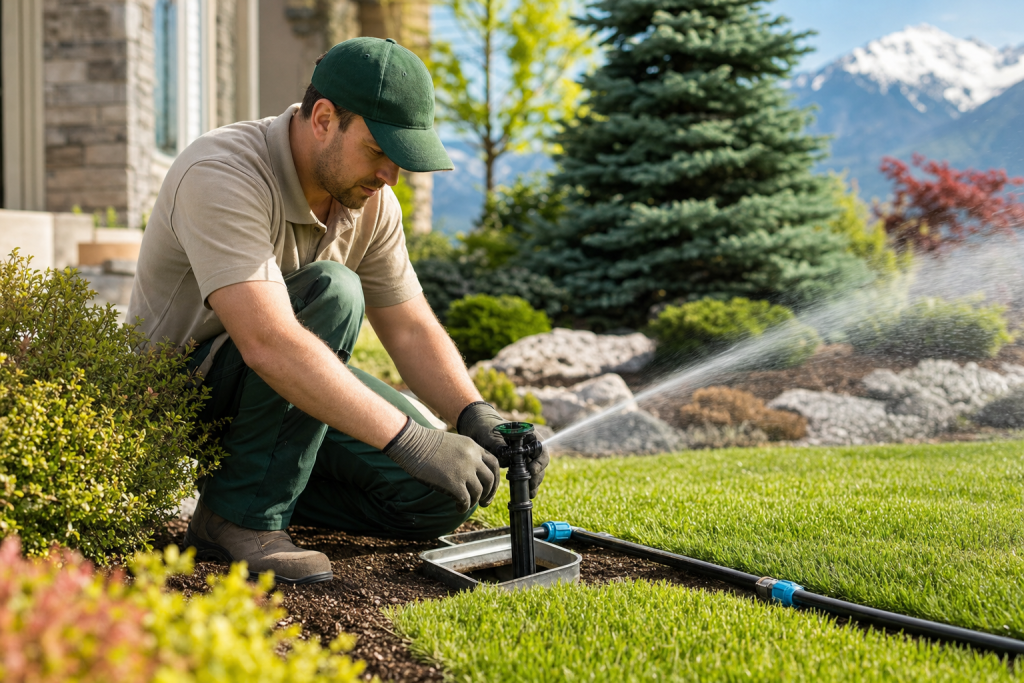
Irrigation repair in Kaysville, UT involves diagnosing and fixing specific failures within an existing sprinkler or drip system, including broken or misaligned heads, leaking valves, damaged lateral lines, controller malfunctions, and pressure irregularities. A qualified crew can typically assess and repair most residential systems in a single visit, restoring even coverage before the lawn or plantings suffer lasting damage.
Key Takeaways
- Most irrigation failures in the Kaysville area trace back to a small number of root causes: broken heads, valve leaks, pressure problems, or controller errors.
- Clay soil in Northern Utah causes heads to shift and lines to crack over time, which is why repairs become more common as systems age past five to seven years.
- Running a system through a full zone-by-zone inspection before repairs saves time and prevents missed problems that show up again two weeks later.
- July heat accelerates visible symptoms, but the underlying damage often started earlier in the season during startup or the first heavy watering cycles.
- Sand Dogs Landscaping serves Kaysville and surrounding communities including West Point and Farmington for irrigation maintenance and repairs.
What Actually Goes Wrong with Irrigation Systems in Northern Utah
The most common call we get for irrigation repair Kaysville UT isn’t a dramatic pipe burst. It’s a homeowner who noticed one section of lawn turning yellow while everything else looks fine, or a head that’s spraying sideways into the fence instead of covering the turf. These symptoms look simple on the surface, but they usually point to one of a handful of specific failure types.
Broken or clogged spray heads are the most frequent culprit. Heads take mechanical wear from mowing equipment, foot traffic, and the freeze-thaw cycles that Northern Utah delivers every spring. By the time July arrives, a head that was borderline in May may have failed completely. Rotary heads can strip internally, causing them to stop rotating and concentrate water in one spot. Fixed spray heads crack at the base or clog with mineral deposits from Utah’s notoriously hard water.
Valve failures are the next most common issue. Solenoid valves control which zones activate, and they can fail in two directions: stuck open, which means a zone runs continuously and drives up your water bill, or stuck closed, which means a zone never receives water at all. Diaphragms inside the valve body wear out over time, and debris from the water supply can prevent a valve from seating properly.
Pressure problems are less obvious but cause real damage. Low pressure, sometimes caused by a partially closed backflow preventer or a leak somewhere in the lateral line, leaves heads underperforming across an entire zone. High pressure, which is more common in areas served by certain municipal water systems, causes heads to mist or fog rather than throw a clean arc, reducing coverage and wasting water. Our irrigation services include pressure testing as part of every diagnostic visit because guessing at pressure issues without measuring them leads to misdiagnosis.
How Does Irrigation Repair Kaysville UT Actually Work on the Day of Service?
We start every repair visit the same way: a full zone-by-zone walkthrough before we touch anything. Running each zone manually while someone walks the property gives us a complete picture of what the system is actually doing versus what it’s supposed to do. We’re looking at head coverage patterns, listening for the pressure drop that indicates a line leak, watching for zones that activate sluggishly or not at all, and checking the controller programming against the current watering schedule.
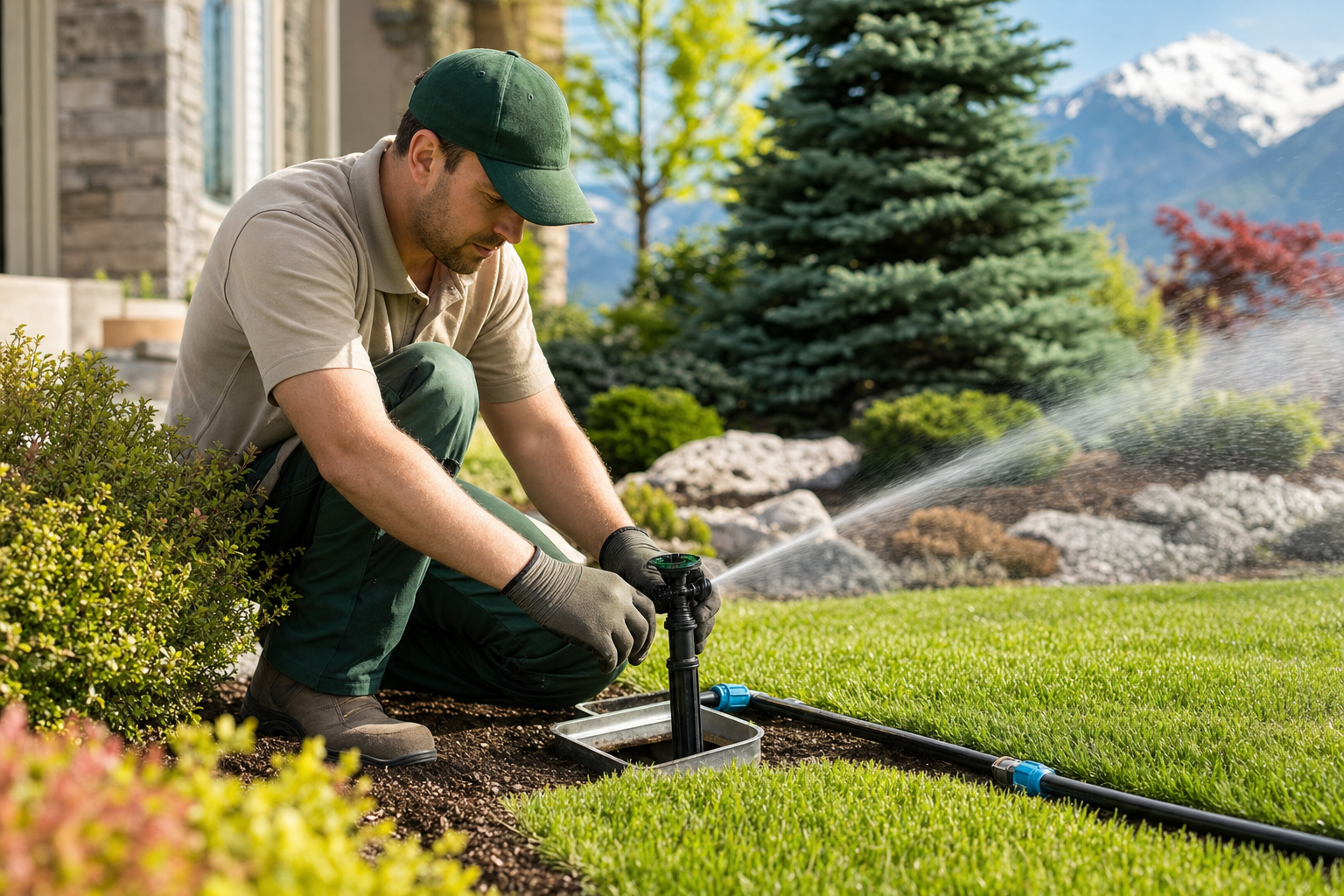
Once we’ve documented the issues across the whole system, we prioritize repairs. Some problems are straightforward: a broken head gets replaced with a matching unit, the riser is checked for stability in the soil, and the zone is re-tested. Other repairs take more time. A leaking lateral line requires locating the break, which sometimes means digging through the compacted clay that characterizes most properties in this part of Davis County. We use the visible wet spot as a starting point, but the actual break is often a foot or two away from where the water surfaces.
Valve repairs involve shutting down the zone, disassembling the valve body, and replacing the diaphragm or solenoid as needed. If the valve housing itself has cracked, we replace the entire valve. Controller issues are usually resolved through reprogramming, but older analog controllers sometimes need to be replaced with a modern unit that allows zone-by-zone runtime adjustments and rain sensor integration.
After every repair, we run the full system again to confirm that the fix held and that we didn’t disturb anything else during the work. That final check is what separates a complete repair from one that sends you back to the phone two weeks later.
How Do You Know It’s Time to Call for a Repair?
Some signs are obvious: a head that’s visibly broken, standing water in a zone that should be dry, or a zone that simply won’t activate. Others are subtler. If your water bill climbed unexpectedly in June or July without a change in your schedule, a slow valve leak or a line break running underground is a likely cause. Dry patches that don’t respond to increased runtime often indicate a coverage gap from a failed head or a pressure problem, not a need for more water overall.
Systems that are five years old or older and have never had a professional inspection are also candidates for a proactive repair visit, particularly if they went through a hard winter. Our lawn care process guide for West Point touches on how winter conditions set up problems that only become visible once systems start running in earnest, and the same dynamic applies across Kaysville and the surrounding communities we serve.
If your system was winterized and started up professionally, you’re in better shape, but startup doesn’t catch everything. Heads that were borderline in October may have finally given out after the first few weeks of summer runtime. Scheduling a dedicated irrigation repair Kaysville UT visit mid-season is often the most cost-effective way to catch those late-developing failures before they damage turf or plantings. Our landscape maintenance team handles mid-season checks for exactly this reason.
Frequently Asked Questions
How long does an irrigation repair visit typically take in Kaysville?
Most residential repair visits take between one and three hours depending on the number of zones and the complexity of the issues found. A single broken head can be replaced in under thirty minutes, while a buried line leak or a multi-zone valve problem will take longer. We always run a complete system check at the end, which adds time but prevents return visits for missed issues.
Can you repair any brand of irrigation system, or only systems you installed?
We work on all major brands of residential irrigation equipment, including Rain Bird, Hunter, Toro, and Orbit. The components are largely standardized, and we carry common replacement heads, valves, and diaphragms on our service vehicles. If a system uses older or proprietary components, we’ll let you know before the repair and source the correct parts.
Why does my irrigation system have dry spots even though all the heads appear to be working?
Visible head operation doesn’t always mean adequate coverage. A head that’s rotating but throwing only half its normal arc due to low pressure, a clogged nozzle, or a worn rotor will leave dry areas at the outer edge of its intended coverage zone. Head spacing also matters, and if a previous repair used a different nozzle radius than the original, gaps appear. A zone-by-zone inspection with a pressure gauge identifies the real cause.
Is July a bad time to schedule irrigation repairs, or should I wait until fall?
July is exactly the right time to address irrigation problems, not a reason to delay. Turf and plantings under heat stress lose ground quickly when water coverage is uneven, and what looks like a minor dry patch in early July can become dead turf by August. Waiting until fall means running a compromised system through the hottest part of the season. We schedule repair visits throughout the summer and typically book within a few days for active failures.
If you’re dealing with an active problem right now, the best next step is a diagnostic visit before the system runs another full cycle on a damaged zone. Reach out through our contact page to get on the schedule. For a broader look at what our team handles across the region, the irrigation services page covers the full scope of work we do from startup through winterization.